The Cayman Institute is an apolitical, privately funded, non profit organization established to consider the long term effects and implications of diverse technological, sociological, economical and cultural issues to the Cayman Islands. Its members work on a voluntary basis and offer strategic plans for consideration to guide the delivery of nearer term projects, so as not to jeopardize the future of the islands' infrastructure, financial and human resources.
Wednesday, July 14, 2010
Hawaii moves closer to green-energy goals
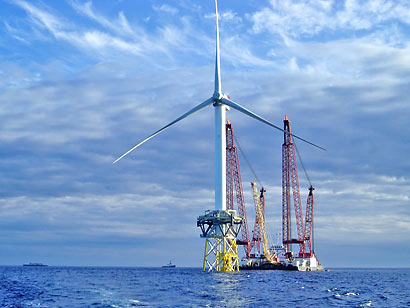
HONOLULU, July 14 (UPI) -- A 30-megawatt wind farm on the Hawaiian island of Oahu will reduce oil consumption by nearly 140,00 barrels per day, a company said.
U.S. wind energy company First Wind broke ground on the Kahuku Wind project on Oahu's north shore. The project could provide enough renewable energy to power more than 7,000 homes and reduce oil consumption by as much as 139,500 bpd, the company said in a statement.
Hawaii Gov. Linda Lingle, a Republican, said the project would help the state meet its goal of getting 70 percent of its energy for electricity and ground transportation by 2030. More >>>
Wednesday, July 7, 2010
Public Meeting Dates – Cayman Islands National Conservation Law
Conservation Law Meetings
| Public Meeting Dates – National Conservation Law | ||
| Date | Location | Time |
| Thursday July 1st | North Side Community Centre | 7 – 9pm |
| Tuesday July 6th | Bodden Town Primary School Hall | 7 – 9pm |
| Thursday July 8th | Elmslie Church Hall, GT | 7 – 9pm |
| Saturday July 10th | Trust House, Little Cayman | 7 – 9pm |
| Monday July 12th | John A. Cumber Hall, West Bay | 7 – 9pm |
| Tuesday July 13th | East End Communicty Centre | 7 – 9pm |
| Thursday July 15th | Aston Rutty Centre, Cayman Brac | 7 – 9pm |
Tuesday, June 29, 2010
Maldives - Green growth improves water security – President Nasheed
In his keynote address at the Asia-Pacific Water Ministers’ Meeting in Singapore, President Mohamed Nasheed spoke on the link between the low carbon growth and water security.
He said, for the Maldives “the links between low carbon growth and water security are particularly pronounced.”
The President said although the most of the country was ocean, the Maldives still had acute fresh and drinking water problems.
He said freshwater lens that provide water for drinking, washing and agriculture has become contaminated by sewage and salt water intrusion forcing a large part of the country to depend on other sources of water including desalinated water.
Many of these problems “arise because of poor governance of water supplies over the past few decades”, added the President.
Speaking on the higher cost and energy inefficiency of desalinated water, the President said, many islands that cannot afford desalinated water rely of unreliable rainwater harvesting. More >>>
Sunday, May 23, 2010
No margin for error
He described it like this: "The world is on a journey to an unstable destination, through unfamiliar territory, on an uneven road and, critically, having already used its spare tire."
I like that image. America used its spare tire to prevent a collapse of the banking system and to stimulate the economy after the subprime market crash. The European Union used its spare tire on its own economic stimulus and then to prevent a run on European banks triggered by the meltdown in Greece. This all better work, because we're not only living in a world without any more spares but also in a world without distance. Nations are more tightly integrated than ever before. We're driving bumper to bumper with every other major economy today, so misbehavior or mistakes anywhere can cause a global pileup.
And that leads to the real point of this column: In this kind of world, leadership at every level of government and business matters more than ever. We have no margin of error anymore, no time for politics as usual or suboptimal legislation. But what does that mean,
"leadership"? More >>>
53 Megawatt Ice Energy Storage Trial Begins In Glendale, California
Over the next few weeks, a consortium of municipal utilities in California will begin retrofitting government offices and commercial properties with systems that use ice made at night using cheap surplus wind power to replace air-conditioning that they would have required during the afternoon.
The first cheap energy storage cooling units housed at distributed sites on the buildings will be networked, providing utilities with a resource that can be dispatched as needed to help manage demand on the grid. If the pilot project works as expected, it will demonstrate savings, such that if put into general use, would reduce fuel consumption by state utilities by up to 30%, and by individual building owners by up to 90%. More >>>
The Cayman Islands needs to consider off peak electricity rates to enable similar technology to be used here. These islands must move towards energy efficiency and efficiency. Editor
Wednesday, May 19, 2010
Costs Rica's top climate change negotiator to Head UNFCCC
Christiana Figueres, daughter of a former president of her country, is the new executive secretary of the United Nations Framework Convention on Climate Change (UNFCCC).
Mr de Boer stepped down shortly after the Copenhagen climate change talks in December last year, following almost universal criticism branding them as a 'disappointment'.
UN secretary-general Ban Ki-Moon said he was 'grateful' to Mr de Boer for his 'dedicated service and tireless efforts' on behalf of the climate change agenda.
He said: "She is an international leader on strategies to address global climate change and brings to this position a passion for the issue, deep knowledge of the stakeholders and valuable hands-on experience with the public sector, non-profit sector and private sector." More >>>
Sunday, May 9, 2010
Small Islands Urge Action at UN Oceans Meet
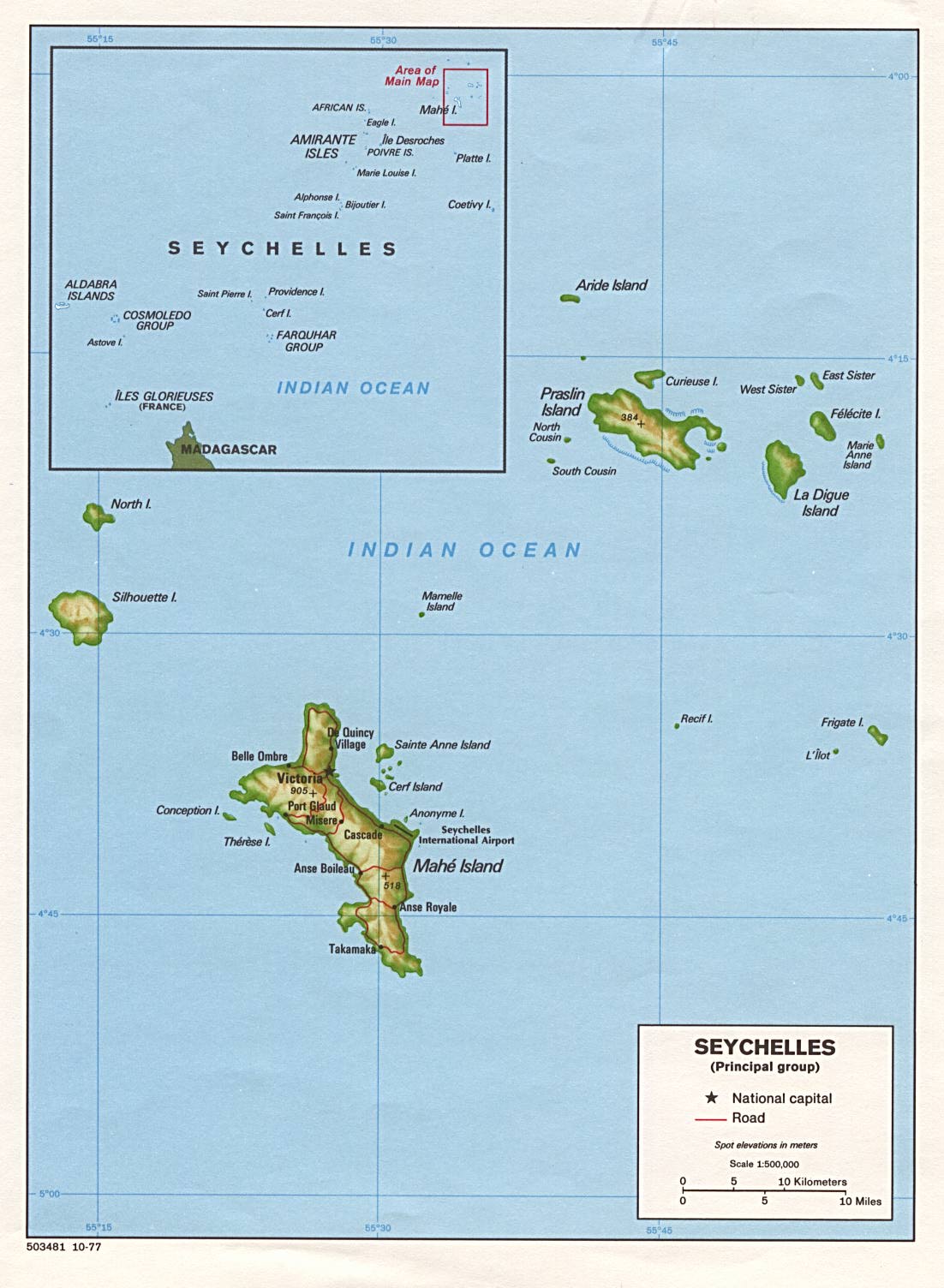
"We are seeing the threat that fisheries will collapse, the threat of tourism-collapse and the loss of biodiversity," said Rolph Payet, special advisor to the President of the Seychelles.
"Some people think that this is just a simple matter to be brushed aside, and to continue with business as usual, emitting greenhouse gases (GhGs) as usual,'' Payet said. "The data shows us that we should be worried, and we should be acting. In fact we should have acted yesterday," he said.
His comments came at the fifth Global Oceans Conference taking place here at the United Nations Educational, Scientific and Cultural Organisation (UNESCO). The May 3-7 meeting has brought together 823 delegates from 80 countries, including many developing nations. More >>>
Thursday, May 6, 2010
Industrial Chemicals Ranked By Warming Potential
Wednesday, May 5, 2010
SRS Energy’s unique thinfilm solar tile, the Solé Power Tile has just passed a key milestone. SRS Energy has obtained an ETL listing report certifying the Solé Power Tile has passed the testing associated with the Underwriters Laboratory (UL) UL 1703 standard. Passing this is the prerequisite for any solar photovoltaics to be approved by the State of California as eligible for CSI rebates from utilities. More >>>
Friday, April 30, 2010
Hawaii Raises Oil Prices, Should Cayman Follow?
Gas prices, power bills and shipping costs will rise after the Hawaii Legislature voted to override a veto of a $1-per-barrel tax increase on oil products.
Hawaii already has the most expensive electricity rates and gas prices in the nation, and they're expected to become even more costly when this tax increase takes effect in July. Island drivers paid $3.58 per gallon of regular unleaded Thursday, according to AAA's Fuel Gauge Report.The petroleum tax is one of 11 measures that will become law following veto overrides by lawmakers Thursday. Others include requiring contractors to hire 80 percent Hawaii residents for public projects, taxing estates worth more than $3.5 million and preventing the closure of welfare offices. More >>>
Wednesday, April 28, 2010
Cape Wind, first U.S. offshore wind farm, approved
(Reuters) - The first U.S. offshore wind farm, a giant project 5 miles/8 km off the Massachusetts coast, was approved on Wednesday after years of opposition involving everyone from local Indian tribes to the Kennedy family.
The turbines, more than 400 feet high, will dot an area of about 24 square miles (62 square km), larger than Manhattan, and be visible low on the horizon from parts of Cape Cod. The site is tucked between the mainland of the cape and the islands of Martha's Vineyard, an exclusive celebrity vacation destination, and Nantucket. More >>>
Sunday, April 25, 2010
Wind's latest problem: it ... makes power too cheap
Sun Apr 25th, 2010 - Bloomberg has a somewhat confusing article about the newest complaint about wind power, but the gist of it is that wind power is an issue for the industry because it brings their revenues down:
operators in Europe may have become their own worst enemy, reducing the total price paid for electricity in Germany, Europe’s biggest power market, by as much as 5 billion euros some years
Implicit in the article, and the headline (which focuses on lower revenues for RWE) is the worry that wind power will bring down the stock market value of the big utilities - which is what the readers of Bloomberg et al. care about.
But despite the generally negative tone of the article, it's actually a useful one, because it brings out in the open a key bit of information: wind power actually brings electricity prices down! More >>>
Sunday, April 18, 2010
No 10 Mw Solar for Kaua’i Hawaii
A 10-megawatt solar power project that would have boosted the amount of renewable energy on Kaua'i isn't moving ahead at this time.
The reason? The Kaua'i Island Utility Cooperative wouldn't agree to pay what the developer wanted for the electricity.
The stalled project provides a glimpse into a not-so-often discussed portion of green energy as the state drives toward adoption of sustainable power projects: Going green could translate into higher electricity prices in the short run for Hawai'i residents.
Utilities are being offered and, in some cases, agreeing to wholesale power purchase contracts that could translate into people paying slightly more for power than they do now. Proponents say it will help stabilize energy costs and lower energy bills in the long run. More >>>
Thursday, April 8, 2010
Ontario adds 2.5 Giggawatts of Alternative Energy

ONTARIO, Canada (TheStreet) -- Ontario has awarded 184 renewable energy projects for a total of 2.5 gigawatts of alternative energy, under its feed-in tariff scheme for projects of more than 500 kilowatts in size, the most favorable FIT scheme that exists in North America.
Solar companies, including Canadian Solar(CSIQ) most prominently, have pegged the Ontario market as an important growth driver as FITs are reduced in some European countries, led by the German FIT reductions. Canadian Solar has committed to building a module assembly manufacturing plant in Ontario. More >>>
Tuesday, March 30, 2010
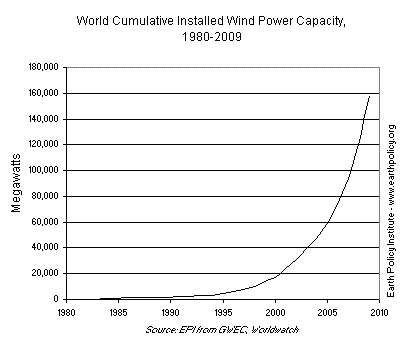
Wind Power Soared Past 150,000 Megawatts in 2009
Even in the face of a worldwide economic downturn, the global wind industry posted another record year in 2009 as cumulative installed wind power capacity grew to 158,000 megawatts.
With this 31 percent jump, the global wind fleet is now large enough to satisfy the residential electricity needs of 250 million people. Wind provides electricity in over 70 countries, 17 of which now have at least 1,000 megawatts installed.
China led the way in 2009 with an astonishing 13,000 megawatts of new wind capacity, the first time any country has built more than 10,000 megawatts in a single year. With 25,000 megawatts overall, China has doubled its total installed wind capacity in each of the last five years, bringing it into third place behind the United States and Germany. And considering the ambitious projects already in its development pipeline, it is not likely to stay in third place for long. More >>>
Wednesday, March 10, 2010
Bahamas Drinking water 'under threat'
THE availability of fresh drinking water in the Bahamas could be jeopardised by climate change and hurricanes, warned State Environment Minister Phenton Neymour, who said this country urgently needs proper water networks and management policies.
Anticipated sea level rise from climate change, hurricane motivated storm surges -- and even heavy rain -- can all contaminate precious water well-fields with brackish, salty water, cautioned Mr Neymour, leading to severe water shortages and unavailability. More >>>
Monday, March 8, 2010
Maldives To Fight Rising Sea Levels With Floating Islands
The tiny island nation of the Maldives is under serious threat from rising sea levels caused by climate change.
No part of the 1200 islands which make up the Maldives is more than six feet above sea level, so as sea-levels rise (as they will if rampant climate change is not stopped), the entire nation will be under water. Because of this, the Maldives government is pulling out all the stops in the fight against climate change. Not only has the entire country gone carbon neutral, educated all of their children in environmental science and furiously built retaining walls around every island, but the government is buying up land in nearby nations as a place to retreat to when the Maldives disappears. Now it appears that the intrepid Maldivians have come up with a new strategy to fight the rising tide: creating mini floating islands! More >>>
Tuesday, March 2, 2010
Sweden to build 2000 wind turbines over next decade
STOCKHOLM - Sweden is planning to build 2,000 new wind turbines in the next 10 years to expand its total power production by 25 terrawatt hours from alternative energy sources.The increase is equivalent to about half of the power generated by the country's nuclear reactors in 2009.
Nuclear power currently accounts for about 50 percent of Sweden's electricity production.The government said Tuesday it would present parliament on Thursday with its proposal for increasing wind power by 10 terrawatt hours.
Sunday, February 21, 2010
British Overseas Territory Ramps Up Wind Power
Annual wind power contribution in the Falkland Islands is set to rise to 40 per cent of total energy generated with the installation of three new wind turbines, which started going online on 15 February. The installation of the first three wind turbines in 2007 has resulted in the displacement of 26% of annual fuel consumption and the aim with the three new turbines is to reach 40% fuel displacement.
To read the press release in full, please click here.
Tuesday, February 9, 2010
Industry group warns that oil crunch is coming within five years
Sir Richard Branson, founder of the Virgin Group, will say the coming crisis could be even more serious than the credit crunch. Photograph: Peter Schneider/EPA
Sir Richard Branson and fellow leading businessmen will warn ministers this week that the world is running out of oil and faces an oil crunch within five years.
The founder of the Virgin group, whose rail, airline and travel companies are sensitive to energy prices, will say that the coming crisis could be even more serious than the credit crunch.
"The next five years will see us face another crunch – the oil crunch. This time, we do have the chance to prepare. The challenge is to use that time well," Branson will say. More >>>
Monday, February 8, 2010
Incentives to Going 'Off Grid' Bring Power to the People
February 8, 2010 by CNN - The price of power has always been a political issue -- but now campaigners argue it could be the key to starting a green energy revolution.
Roofs in the Vatican City covered with solar panels point the way to off-grid power.
On February 1, the British Government announced details of the rates that will be paid for renewable power generated by homeowners and communities.
Called the Clean Energy Cashback, or feed-in tariff (FIT), the aim is to provide an above-market bonus that will encourage individuals and groups to invest in solar panels, wind turbines and other forms of green power. More >>>
Saturday, February 6, 2010
Vanishing Island States and sovereignty
Abstract
Sea level rise could bring about an event that has not previously been seen in modern history, that of the physical disappearance of some low-lying Island States.
The objective of this paper is to examine what are the likely scenarios for some of these islands in the course of the next century, and analyse for each scenario if these Island States could continue to claim an Exclusive Economic Zone or not.
Also, it will analyse the possibility that Island States could continue having some sort of status analogous to state- hood even if it was to lose all territory. Finally, the idea of a ‘‘government-in-exile’’ will be discussed, where the State could retain its identity waiting for a future re-emergence of the island. More >>>
Sunday, January 31, 2010
Monster tides smother Torres Strait islands
January 31, 2010 RISING sea levels drove king tides across vulnerable island communities in the Torres Strait, causing damage to homes and infrastructure.
Monster tides swept through Australia's most northern island of Saibai yesterday, flooding homes, sewage treatment works, water supplies, crops and sacred cultural sites.
"What baffles me is the Federal Government can give $150 million to the Pacific Islands for climate change, but it won't fix up our back yard when we are being inundated right now," Torres Strait Regional Authority chairman Toshie Kris said.
"We have tried many ways to bring this to the attention of the Prime Minister. We have invited him to the islands to see first-hand, but we have had no response." More >>>
Saturday, January 23, 2010
Global warming is real, and we should be worried
January 22, 2010 - Our Cascade Range was the "nursery" for Seattle-based explorer, author and photographer James Martin, the Canadian Rockies' Athabasca Glacier was where he learned to ice climb, and South Georgia Island near Antarctica is his favorite of all places.
But Martin, author of "Planet Ice", has also learned that ice is the key to life for polar bears in the Arctic, farmers near the Equator in Peru, and even the globe's most populous nation.
"The northern part of Tibet is called the water tower of China, and it is going dry," Martin told an audience at The Mountaineers on Thursday night. More >>>
Friday, December 4, 2009
An excellent video on the melting of the Himalayan glaciers
Visit msnbc.com for breaking news, world news, and news about the economy
Saturday, November 28, 2009
Sea level rise could cost port cities $28 trillion
London, England (CNN) -- A possible rise in sea levels by 0.5 meters by 2050 could put at risk more than $28 trillion worth of assets in the world's largest coastal cities, according to a report compiled for the insurance industry.
The value of infrastructure exposed in so-called "port mega-cities," urban conurbations with more than 10 million people, is just $3 trillion at present.
The rise in potential losses would be a result of expected greater urbanization and increased exposure of this greater population to catastrophic surge events occurring once every 100 years caused by rising sea levels and higher temperatures. More >>>
Saturday, November 21, 2009
Climate change to lash Britain with tropical storms
BRITAIN should brace itself for more tropical-style deluges of the kind that wreaked havoc on Cockermouth, according to climate experts.
They warn that, although no single event can be attributed to climate change, the warming of the atmosphere caused by greenhouse gases means such disasters will become more frequent.
“We need to follow the example of tropical cities like Kuala Lumpur and Singapore where flooding is a regular event,” said Roger Falconer, professor of water management at Cardiff University.
“They have huge flood drains and roads, all designed to channel water away from danger areas. Britain must learn to think the same way.”
Such warnings are in line with recent studies into how Britain’s climate may change. They suggest summers will become drier and warmer, but winters will be marked by storms, strong winds and more deluges.
More >>>
Sunday, November 1, 2009
Japan accelerates purchase of surplus solar electricity at homes
TOKYO — Sunday 1st November, - The government launched Sunday a new program that enables power companies to purchase at higher rates surplus electricity produced by solar power generation systems installed in homes, schools and hospitals.
The move is Japan’s latest attempt to make photovoltaic generation, which is cleaner in terms of carbon emissions than fossil fuels, more popular at the public level and to step up efforts to fight global warming. On Saturday, the government said it may further accelerate such efforts, with Deputy Prime Minister Naoto Kan expressing his hope to launch another program during the year through March 2011, under which utility companies would buy all the solar electricity generated at homes and elsewhere. Kan said that would help give incentives to people to install solar panels on their roofs with ‘‘the state not required to spend even 1 yen.’’ Under the program begun Sunday, effective through the next 10 years, many of the utility firms will almost double payments to 48 yen for each kilowatt generated per hour by households and 24 yen by schools, hospitals and other facilities.
To cover the rise in costs, the electricity companies will collect a monthly surcharge of around 30 yen from every household and organization using electricity in the country, starting in April. The surcharge is expected to rise to 50 to 100 yen in the next five to 10 years and critics say the additional burden will only weaken consumer sentiment, delaying Japan’s emergence from the economic downturn. More >>>
Wednesday, October 28, 2009
Countdown to Copenhagen
Lily Allen and Duran Duran launch celebrity climate campaign track
The first global music petition, a re-recording of Midnight Oil's Beds are Burning, is aimed at pressuring world leaders at Copenhagen.
Over 60 musicians, including Duran Duran, Lily Allen and Bob Geldof, today launched the world's first digital musical petition: a re-recording of the Midnight Oil song, Beds are Burning, aimed at pressuring world leaders to make a hard-hitting deal over climate change at December's Copenhagen summit.
Described by Kofi Annan as "the Band Aid for the internet generation", the song is the first time such a long list of world celebrities has recorded a campaign track in protest of global warming and climate change. It is also the first ever global music petition: the track is available free online and downloading it automatically adds the listener to the campaign petition: "Tck Tck Tck, Time for Climate Justice". More >>>
Friday, October 23, 2009
Joe Biden to Solar Power the USA With Berkeley First Municipal Tax Assessment Financing
Vice President Joe Biden just revealed a plan to make Berkeley First available nationwide. Yesterday at his Middle Class Task Force meeting Biden proposed the way to make solar roofs easy for everyone to afford with virtually free solar panels. If you now pay your current electricity bill and own a home, that’s literally all it takes to go solar under municipal tax assessment financing.
How FIRST Works
Residential and commercial property owners in Berkeley can finance new solar photovoltaic systems using the FIRST program in conjunction with the CSI rebate program. BerkeleyFIRST allows property owners to repay the cost of the solar system through a voluntary tax increment on their property tax bill. The City of Berkeley application process is currently closed.
Program Process
If you are approved, the City pays the installation cost of your new solar system. In turn, the City adds a line item to your property tax bill sufficient to repay the cost of the energy project plus interest over 20 years. If you sell your house, both the solar system and the remaining debt stay with the property. More >>>
As it appears that the Cayman Islands will have to expand their revenue base, the Cayman Islands Government should consider implementing this type of program in conjunction wth the banking industry. Editor
Tuesday, October 20, 2009
Monday, October 19, 2009
Gordon Brown warns of climate catastrophe.
Brown: '50 days to save world' Watch Video
The UK faces a "catastrophe" of floods, droughts and killer heatwaves if world leaders fail to agree a deal on climate change, the prime minister has warned.
Gordon Brown said negotiators had 50 days to save the world from global warming and break the "impasse".
He told the Major Economies Forum in London, which brings together 17 of the world's biggest greenhouse gas-emitting countries, there was "no plan B".
World delegations meet in Copenhagen in December for talks on a new treaty.More >>>
Wednesday, October 14, 2009
UNESCO General Conference - Ocean and Climate Change
Theme 3: Ocean and Climate Change – the impacts on and from the Ocean: Adapting coastal communities to sea-level rise
Keynote Speech – Dr Rolph Payet, Special Advisor to the President of Seychelles.
UNESCO General Conference 13 September 2009
Distinguished Delegates
Millions of people on the planet now live on the edge of the abyss. The polar people and polar bears are seeing the ice melt before their very own eyes, and island people are seeing their land swallowed up by the sea, sometimes in a blink of an eye.
The ocean is the window to present and future climate change. To predict the onset of the cyclonic seasons, El Nino and other natural phenomenon, scientists turn to the oceans. The oceans are the earth’s barometer and heartbeat. We need to take heed of its signals. Recent studies strongly indicates that sea levels are rising much faster than estimated by the Intergovernmental Panel on Climate Change. We are now looking at a rise of more than 1.4 meters by 2100, assuming that the melting glaciers of Antarctica and Greenland do not accelerate. The World Bank estimates that a 10% increase in storm surge intensity would place 52 million people at risk of inundation. More >>>
Monday, September 28, 2009
Tuesday, September 22, 2009
Utility Leaves Chamber Over Climate Issue
September 22, 2009, Pacific Gas & Electric, the big California utility, has pulled out of the United States Chamber of Commerce over what its chairman, Peter Darbee, termed “fundamental differences” over the climate change issue.
In a letter to the Chamber — a business group that has often been a vocal critic of President Obama’s policies to regulate greenhouse gas emissions — Mr. Darbee wrote: We find it dismaying that the Chamber neglects the indisputable fact that a decisive majority of experts have said the data on global warming are compelling and point to a threat that cannot be ignored. In our opinion, an intellectually honest argument over the best policy response to the challenges of climate change is one thing; disingenuous attempts to diminish or distort the reality of these challenges are quite another. Excerpts from the letter were published on PG&E’s blog, Next100.com. PG&E is the dominant utility in northern California, and has aggressively pursued energy efficiency and renewable energy. More >>>
Saturday, September 19, 2009
Natural Resources Minister leads energy delegation to Europe
Friday, 18 September 2009 Minister for Natural Resources and Labour Omar W. Hodge left the Territory Tuesday as head of a delegation to Europe to aid in developing the BVI’s energy policy.
The primary purpose of the trip is to determine the feasibility of using waste gasification for energy generation and to view the energy conversion practices at resident plants.
Minister Hodge said the trip will provide the framework needed for Government to explore first hand energy consumption patterns used in industrial countries and identify efficiency measures necessary for local implementation.
“We know that we cannot continue our dependence on oil as over the past year the price has fluctuated widely with a high of $147.00 per barrel. We are seeking to be proactive in identifying green solutions for our energy needs,” Hon. Hodge said. More >>>
Saturday, September 12, 2009
European Union Begins Ban of Incandescent Light Bulbs
The ban of incandescent light bulbs in the EU has been motivated by the fact that they are 75% less eco-friendly than compact fluorescent light bulbs, plus CFL’s last 10 times longer so they not only save on energy consumption and cost, but the light bulb very quickly pays for itself through its savings.
Little by little, nations worldwide are doing their part to reduce their environmental footprint, and this is one way that the EU is hoping to do their part!
The European Union is on the cutting-edge of green technology; already ahead of many nations through its introduction a ban of incandescent light bulbs that began on September 1, 2009. The ban of these incandescent light bulbs has a goal of reducing region-wide energy costs through use of the more eco-friendly compact fluorescent light bulbs instead.
In order to move forward with this ban of incandescent light bulbs, the EU is not allowing retailers in the area to purchase these lighting options which take a known toll on the environment and our household energy costs. With fairness in mind, however, retailers are allowed to continue to sell incandescent light bulbs that they already have in stock. By implementing this ban, the EU is hoping that it will contribute to their goal of reducing greenhouse gasses by 2010 and will convert the population to becoming more energy-efficient in their line of thinking. THe public has not reacted entirely favorably to this ban, protesting that they have the right to choose their own lighting options in their homes; but meanwhile, the United States is watching closely to see how well received it is since a similar initiative will be underway in 2012.
The ban of incandescent light bulbs in the EU has been motivated by the fact that they are 75% less eco-friendly than compact fluorescent light bulbs, plus CFL’s last 10 times longer so they not only save on energy consumption and cost, but the light bulb very quickly pays for itself through its savings. Little by little, nations worldwide are doing their part to reduce their environmental footprint, and this is one way that the EU is hoping to do their part! More >>>
Wednesday, September 9, 2009
Find your new electric vehicle
Plug-In Vehicle Tracker: What’s Coming, When
Virtually every major auto manufacturer in the world, along with several smaller outfits, is developing a plug-in electric vehicle and Plug In America is tracking their progress. Our list below will be updated monthly. It represents highway-capable cars and trucks, 2- and 3-wheeled and commercial vehicles. Low-speed electric vehicles and conversions are not included. For a list of Neighborhood Electric Vehicles, visit http://www.eaaev.org/eaalinks.html#NEVs.
Telephone your Member of Parliament and ask them to pass the requisite legislation to enable the importation and licensing of alternativly powered vehicles.
Sunday, September 6, 2009
Carbon capture and storage is expensive, risky and may not work, writes Paddy Manning.
September 7, 2009 : THERE may be a few forced smiles when Martin Ferguson dishes out $2.4 billion in funding for a handful of "flagship" carbon capture and storage projects (CCS), intended to clean up carbon dioxide emissions from coal-fired power stations.
As the Energy and Resources Minister knows, these CCS projects have taken one helluva time to get up and running - and it will be a long while yet before they make any significant contribution to Australia's CO
For at least a decade, the coal industry has promoted a range of clean coal technologies, including CCS, as an alternative to renewable energy. But as necessary emission reduction trajectories get deeper and steeper, the industry has been tardy - stubborn, even - about paying for it.
Instead the public will foot most of the bill for CCS, and will wear the liability if it goes wrong. More >>>
Tuesday, July 28, 2009
Despite almost universal awareness of the threat posed by climate change, households are still left feeling powerless to act, says Paul King. In this week's Green Room, he sets out his vision that he believes would kick-start a "refurbishment revolution".
A searing summer heatwave might not seem the most obvious time to talk about how we keep our homes warm during the winter; but the two things are closely related.
Recent temperatures in the UK and elsewhere give an indication of what life will be like much more frequently unless we get to grips with the greenhouse gas emissions that cause climate change.
Shrinking ice sheets and images of polar bears might attract the headlines.
But it will be premature deaths through heat stroke and respiratory problems, failed harvests, wildfires, social disorder and mass migration that will make climate change a reality for people across the globe. More >>>
Wednesday, June 17, 2009
Do And Don't Of Building In Hurricane-prone Areas
ScienceDaily (June 16, 2009) — Better building practices for structures in hurricane-prone regions will be the focus of a paper next month in Caribbean Construction Magazine by NJIT architecture professor Rima Taher, PhD.
Taher has written extensively about best building design and construction practices to reduce wind pressures on building surfaces and to resist high winds and hurricanes in residential or commercial construction.
She is a civil/structural engineer who teaches at NJIT's College of Architecture and Design. Her courses include topics related to wind and earthquakes with guidelines and recommendations for better design and construction in hurricane and earthquake prone areas. More >>>
Friday, June 5, 2009
Pacific Islands pass U.N. resolution on climate change and security
The General Assembly of the United Nations unanimously passed a resolution urging the relevant organs of the U.N. to intensify their efforts to address the security implications of climate change, including sea-level rise.
At right above -H.E. Ms. Marlene Moses for Nauru and PSIDS chair introduced the resolution to the General Assembly.
The passage of the resolution marks the culmination of a year-long campaign by a coalition of Pacific small island developing states (PSIDS) to focus the attention of the international community on the security aspects of climate change and to refer the issue to the Security Council. Though international organizations and many governments have been examining the link between climate change and security issues, this is the first time that the full U.N. General Assembly has made the connection in this type of formal instrument. More >>>
General Assembly Statement: Expressing Deep Concern, Invites Major United Nations Organs to Intensify Efforts in Addressing Security Implications of Climate Change
Wednesday, May 27, 2009
World Business Leaders Hear Catastrophic Climate Warnings
COPENHAGEN, Denmark, May 25, 2009 (ENS) - "We meet at a critical moment in human history. Our planet is warming to dangerous levels," UN Secretary-General Ban Ki-moon told the opening session of the World Business Summit on Climate Change in Copenhagen on Sunday.
Encouraging world business leaders to create a global economy that is "cleaner, greener and more sustainable, Ban told 700 delegates from the business community that "climate change is the defining challenge of our time."
UN Secretary-General Ban Ki-moon (Photo courtesy Copenhagen Climate Council/Peter Sørensen)
"You and your colleagues have the ingenuity and vision to lead by example where others, including governments, are lagging behind," he said. "With your support and through your example, we must harness the necessary political will to seal the deal."
In Copenhagen in December, governments are expected to conclude negotiations on a successor pact to the Kyoto Protocol, whose first commitment period for reducing greenhouse gas emissions ends in 2012.
More >>>
Monday, May 18, 2009
Guyana and Jamaica urge global approach to climate change at UN conference
GEORGETOWN, Guyana --May 18, 2009 - The United Nations Commission on Sustainable Development concluded its 17th session on Friday with concrete policy options to drive practicable actions on agriculture, rural development, land, drought and desertification.
During a high-level segment last week, Guyana's President Bharrat Jagdeo, a climate change activist, said while raising awareness is vital, it is not enough to achieve sustainable development. He says as an international community, we need to turn this awareness into solutions that make the difference we urgently require.
Jamaica’s Minister of Agriculture and Fisheries Christopher Tufton said climate change is the single most urgent threat confronting Small Island developing States
Tufton speaking on behalf of the Alliance of Small island States (AOSIS) said it attached great importance to the work of the Commission on Sustainable Development. More >>>
Saturday, May 9, 2009
Hawaii enacts legislation on electric cars, alternative energy
Hawai'i will become one of only a few states that require large parking lots to reserve spaces for electric cars and to provide recharging capacity if a bill passed by the Legislature is signed into law.
The measure would take Hawai'i one step closer to developing a viable electric-vehicle market, supporters say.
"We're definitely on the cutting edge on this," said Robert Harris, director of the Hawai'i chapter of the Sierra Club.
The bill was among a handful of adopted measures that environmentalists applauded yesterday as the Legislature wrapped up its session.
A key one would increase the tax on a barrel of oil by $1 to help the state explore alternative energy and protect local agriculture. More >>>
Saturday, May 2, 2009
Q&A: Copenhagen climate change summit 2009
Environment ministers and officials are meeting in at a UN summit Copenhagen in December to thrash out global deal on climate change. What's on the agenda?
What is the Copenhagen climate change summit?
From December 7 environment ministers and officials will meet in Copenhagen for the United Nations climate conference to thrash out a successor to the Kyoto protocol. The conference, held at the modern Bella Center, will run for two weeks. The talks are the latest in an annual series of UN meetings that trace their origins to the 1992 Earth Summit in Rio, which aimed at coordinating international action against climate change. More >>>
Sunday, April 19, 2009
Chu: Climate change 'very, very scary'
April 18, 2009 -PORT OF SPAIN, Trinidad and Tobago, April 18 (UPI) -- U.S. Energy Secretary Steven Chu said Saturday the prospect of more severe hurricanes and rising sea levels in the Caribbean is "very, very scary."
Chu, who met with government officials from other Western hemisphere nations at the Summit of the Americas in Trinidad and Tobago, said it is "a demonstrable fact" that the climate is changing and "very, very convincing evidence -- very high probability it was caused predominantly by greenhouse gas emissions."
Referring to a report by the Intergovernmental Panel on Climate Change, Chu said there is a reasonable probability that Earth's temperature will rise between 2 and 4 degrees Centigrade or more by the end of this century. More >>>
Saturday, April 18, 2009
Obama Calls for Thaw in U.S. Relations With Cuba
PORT OF SPAIN, Trinidad and Tobago - April 18, 2009— President Obama, seeking to thaw long-frozen relations with Cuba, told a gathering of Western Hemisphere leaders on Friday that “the United States seeks a new beginning with Cuba,” and that he was willing to have his administration engage the Castro government on a wide array of issues.
Mr. Obama’s remarks, during the opening ceremony at the Summit of the Americas, are the clearest signal in decades that the United States is willing to change direction in its dealings with Cuba. They capped a dizzying series of developments this week, including surprisingly warm words between Raúl Castro, Cuba’s leader, and Secretary of State Hillary Rodham Clinton. More >>>
Friday, April 17, 2009
Clinton admits Cuba policy failed
Monday, April 13, 2009
Climate Change Explained
Climate change explained - the impact of temperature rises
Mark Lynas - The Guardian, Tuesday 14 April 2009
Less than 2C
Arctic sea icecap disappears, leaving polar bears homeless and changing the Earth's energy balance dramatically as reflective ice is replaced during summer months by darker sea surface. Now expected by 2030 or even earlier.
Tropical coral reefs suffer severe and repeated bleaching episodes due to hotter ocean waters, killing off most coral and delivering a hammer blow to marine biodiversity.
Droughts spread through the sub-tropics, accompanied by heatwaves and intense wildfires. Worst-hit are the Mediterranean, the south-west United States, southern Africa and Australia.
2C-3C
Summer heatwaves such as that in Europe in 2003, which killed 30,000 people, become annual events. Extreme heat sees temperatures reaching the low 40s Celsius in southern England.
Amazon rainforest crosses a "tipping point" where extreme heat and lower rainfall makes the forest unviable - much of it burns and is replaced by desert and savannah.
Dissolved CO2 turns the oceans increasingly acidic, destroying remaining coral reefs and wiping out many species of plankton which are the basis of the marine food chain. Several metres of sea level rise is now inevitable as the Greenland ice sheet disappears.
3C-4C
Glacier and snow-melt in the world's mountain chains depletes freshwater flows to downstream cities and agricultural land. Most affected are California, Peru, Pakistan and China. Global food production is under threat as key breadbaskets in Europe, Asia and the United States suffer drought, and heatwaves outstrip the tolerance of crops.
The Gulf Stream current declines significantly. Cooling in Europe is unlikely due to global warming, but oceanic changes alter weather patterns and lead to higher than average sea level rise in the eastern US and UK.
4C-5C
Another tipping point sees massive amounts of methane - a potent greenhouse gas - released by melting Siberian permafrost, further boosting global warming. Much human habitation in southern Europe, north Africa, the Middle East and other sub-tropical areas is rendered unviable due to excessive heat and drought. The focus of civilisation moves towards the poles, where temperatures remain cool enough for crops, and rainfall - albeit with severe floods - persists. All sea ice is gone from both poles; mountain glaciers are gone from the Andes, Alps and Rockies.
5C-6C
Global average temperatures are now hotter than for 50m years. The Arctic region sees temperatures rise much higher than average - up to 20C - meaning the entire Arctic is now ice-free all year round. Most of the topics, sub-tropics and even lower mid-latitudes are too hot to be inhabitable. Sea level rise is now sufficiently rapid that coastal cities across the world are largely abandoned.
6C and above
Danger of "runaway warming", perhaps spurred by release of oceanic methane hydrates. Could the surface of the Earth become like Venus, entirely uninhabitable? Most sea life is dead. Human refuges now confined entirely to highland areas and the polar regions. Human population is drastically reduced. Perhaps 90% of species become extinct, rivalling the worst mass extinctions in the Earth's 4.5 billion-year history.
• Mark Lynas is the author of Six Degrees: Our Future on a Hotter Planet
World will not meet 2C warming target, climate change experts agree
14 April 2009 - Almost nine out of 10 climate scientists do not believe political efforts to restrict global warming to 2C will succeed, a Guardian poll reveals today. An average rise of 4-5C by the end of this century is more likely, they say, given soaring carbon emissions and political constraints.
Such a change would disrupt food and water supplies, exterminate thousands of species of plants and animals and trigger massive sea level rises that would swamp the homes of hundreds of millions of people.
The poll of those who follow global warming most closely exposes a widening gulf between political rhetoric and scientific opinions on climate change. While policymakers and campaigners focus on the 2C target, 86% of the experts told the survey they did not think it would be achieved. A continued focus on an unrealistic 2C rise, which the EU defines as dangerous, could even undermine essential efforts to adapt to inevitable higher temperature rises in the coming decades, they warned.
The survey follows a scientific conference last month in Copenhagen, where a series of studies were presented that suggested global warming could strike harder and faster than realised. More >>>
Sunday, April 5, 2009
Cayman Institute Representative Attends Arctic SIDS Conference
Arctic, Island & Advocate Voices Highlight Climate Impacts, Call for Stronger Targets.Urge Climate Negotiators, Members of Congress, and the Obama Administration to Adopt 'Bolder' Ambitious Emission Reduction Targets
WASHINGTON, April 1 /PRNewswire-USNewswire/ -- Voices from the frontlines of climate change and leading advocates today called for the climate negotiators currently in Bonn, Members of Congress, and the Obama Administration to commit to ambitious targets for reducing greenhouse gas emissions that are threatening the existence of vulnerable communities in the Arctic, small island developing States (SIDS), and other places around the world.
At a briefing organized by the Climate Law & Policy Project (CLPP) and Many Strong Voices (MSV), a panel of experts expressed frustration with the sizable gap between the urgent and bold action that climate science and real-world observations indicate is necessary and the proposed commitments put forth in domestic and international political forums.
Arctic and island peoples are already experiencing significant climate impacts due to a rise in global average temperatures of about .75ºC (about 1.3ºF) since pre-industrial times, corresponding to an increase in atmospheric greenhouse gas (GHG) concentrations from around 280 ppm to over 380 ppm. Yet the goal espoused by many in domestic and international policy processes is to limit warming to 2ºC (3.6ºF) - almost triple the amount of warming that has already occurred. More >>>