Tuesday, August 12, 2008

GLOBAL: What we are doing about climate change


Photo: UN Library
Years of poorly regulated emissions have made the earth warmer
JOHANNESBURG, 5 August 2008 (IRIN) - In developing countries, where survival is often a daily struggle, people cannot afford to wait for their government to bail them out. Many are living in the grip of climate change, coping with frequent droughts, heavy flooding, intense cyclones and other extreme weather events, and have found ways to adapt:

- In Bangladesh, women farmers faced with frequent floods are building 'floating gardens' — hyacinth rafts on which to grow vegetables in flood-prone areas.

- In Sri Lanka, farmers are experimenting with rice varieties that can cope with less water and higher levels of salinity in the water.

- In Malawi, some small-scale farmers dependent on rain-fed agriculture have begun planting faster maturing maize to cope with more frequent droughts.

But, on a global scale governments continue to be deadlocked on the issue of reducing the emission of dangerous greenhouse gases, such as water vapour, carbon dioxide, ozone and methane, which are making the earth warmer. According to the UN World Meteorological Organisation (WMO), the decade from 1998 to 2007 was the warmest on record.More >>>

Saturday, August 9, 2008

Sub to make deep dive in Cayman Trench

Sub to make deep Caribbean dive

August 9 2008: Scientists are set to explore the world's deepest undersea volcanoes, which lie 6km down in the Caribbean. Delving into uncharted waters to hunt for volcanic vents will be Autosub6000, Britain's new autonomously controlled, robot submarine. Once found, the life, gas and sediment around the vents - the world's hottest - will be sampled and catalogued.

The research will be carried out by a British team aboard the UK's latest research ship, the James Cook.
"We are heading out on two expeditions, each close to a month long, to map the full length of the Cayman Trough," said team leader, Dr Jon Copley of the National Oceanography Centre in Southampton (NOCS).
Dr Copley explained that the Cayman Trough, which lies between Jamaica and the Cayman Islands, is a product of the Caribbean tectonic plate pulling away from the American plate.

"It is the world's deepest volcanic ridge and totally unexplored," the Southampton-based researcher told BBC News. More >>>

Wednesday, August 6, 2008

First 100 Percent Wind-powered Community In U.S.

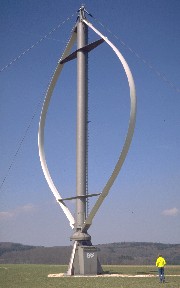
Rock Port, Missouri is the first one hundred percent wind powered community in the United States

ScienceDaily (July 16, 2008) — Rock Port Missouri, with a population of just over 1,300 residents, has announced that it is the first 100% wind powered community in the United States. Four wind turbines supply all the electricity for the small town.
Rock Port’s 100% wind power status is due to four wind turbines located on agricultural lands within the city limits of Rock Port (Atchison County). The city of Rock Port uses approximately 13 million kilowatt hours of electricity each year. It is predicted that these four turbines will produce 16 million kilowatt hours each year. More >>>

Sunday, August 3, 2008

Caribbean Community Climate Change Centre

CCCCC Mission Statement:

Through its role as a Centre of Excellence, the Centre will support the people of the Caribbean as they address the impact of climate variability and change on all aspects of economic development through the provision of timely forecasts and analyses of potentially hazardous impacts of both natural and man-induced climatic changes on the environment, and the development of special programmes with create opportunities for sustainable development.

Introduction:

The Caribbean Community Climate Change Centre coordinates the Caribbean region’s response to climate change. Officially opened in August 2005, the Centre is the key node for information on climate change issues and on the region’s response to managing and adapting to climate change in the Caribbean. More >>>

Friday, August 1, 2008

Harsh Climate Change Once Fell Swiftly

Aug. 1, 2008 -- It's one of the most dramatic examples of climate change in Earth's history, and scientists now say it happened almost entirely in one year's time.

Thirteen thousands years ago, Europe was much like it is today -- cool but temperate, with great forests carpeting the land. Ice sheets still nibbled at Finland and Sweden, but for much of the continent the last Ice Age was a distant memory. Suddenly, the climate went haywire. Warm Gulf Stream currents that brought heat from the equator up toward the pole began to fail. Temperatures plummeted 3 to 4 degrees Celsius, and stayed that way for a millennium.

Now scientists believe they've pinpointed the exact time the northern hemisphere was plunged back into a deep freeze. Examining sediments preserved at the bottom of a remote lake in western Germany, they found that what's known as the Younger Dryas cold period took just a year to sweep across the continent, starting in the autumn, 12,679 years ago. More >>>

Monday, July 28, 2008

Population Policy Needed In Order To Combat Climate Change, Experts Argue

ScienceDaily (July 28, 2008) — The biggest contribution UK couples can make to combating climate change would be to have only two children or at least have one less than they first intended, argues an editorial published in the British Medical Journal.

Family planning and reproductive health expert Professor John Guillebaud and Dr Pip Hayes, a GP from Exeter, call on UK doctors to break their silence on the links between population, family planning and climate change. They point to a calculation by the Optimum Population Trust that "each new UK birth will be responsible for 160 times more greenhouse gas emissions … than a new birth in Ethiopia."
More >>>

Thursday, July 24, 2008

CUC announces wind project request for expressions of interest

GRAND CAYMAN, Cayman Islands, July 24 2008 - Caribbean Utilities Company, Ltd. today announced that it will formally request expressions of interest from qualified wind generation developers for wind generation project of up to 10 megaWatt ("MW") on the island of Grand Cayman, Cayman Islands.

A formal Request for Expressions of Interest will be posted on the CUC website.

In 2003, CUC completed a 12 month, two-site wind study with the support of an independent consultant. At that time, wind generation was not considered viable based on the measured wind intensity and duration and the lower cost of the prevailing diesel generation. CUC believes that this source of energy may now prove viable with reasonable assumptions regarding future fuel prices, capital costs and operating costs.

CUC currently relies upon diesel generation to produce electricity for Grand Cayman. CUC's power system is comprised of 17 generating units (15 diesel and two gas turbines) with a combined capacity of 136.6 megaWatts.

More >>>

Tuesday, July 15, 2008

28 EU overseas entities join forces for the first time to counter climate change - IUCN

11 July 2008 - For the first time the EU’s overseas entities have come together at a meeting in Reunion Island, calling for action on climate change impacts to help preserve nature, says IUCN (International Union for Conservation of Nature) at the Reunion

Conference on Climate Change and Biodiversity in EU Overseas Entities (7-11 July).

With mounting pressure on the environment and people’s livelihoods better management and research is needed to identify the threats posed by climate change, allowing for appropriate adaptation measures in EU overseas entities. “IUCN is fully aware of the exceptional importance of biodiversity in EU overseas entities when compared with continental Europe, and their particular vulnerability to climate change,” says IUCN Director General Julia Marton-Lefèvre. “Whether in Reunion, Greenland or Tahiti, biodiversity is one of the main assets for the well-being of the populations and the economic development of these territories.” More >>>

Monday, July 14, 2008

Energy-Addicted US Can Learn a Lot From Europe

A few days before we flew to Barcelona last month to attend a wedding, international headlines filled with news that truckers had blocked roadways leading to Spain’s major cities, leaving some store shelves bare.

The wildcat strike passed, and the wedding went off without a hitch. But the independent truckers’ protest — and subsequent efforts by Spanish farmers to block roadways in protest — bear testament to the pain inflicted by diesel fuel prices that have passed $8 a gallon and continue to climb. Gasoline prices in Europe are even higher, roughly 1.5 euros per liter for regular in the French countryside last month or about $8.50 a gallon. But petrol, as it's called, has always cost a lot more in Europe, in large part because of much higher taxes at the pump. That’s right, $8 a gallon. More >>>

Friday, July 11, 2008

One-third Of Reef-building Corals Face Extinction from climate change

ScienceDaily (July 11, 2008) — A third of reef-building corals around the world are threatened with extinction, according to the first-ever comprehensive global assessment to determine their conservation status. The study findings were published today by Science Express.
Leading coral experts joined forces with the Global Marine Species Assessment (GMSA) -- a joint initiative of the International Union for Conservation of Nature (IUCN) and Conservation International (CI) -- to apply the IUCN Red List Categories and Criteria to this important group of marine species.
"The results of this study are very disconcerting," stated Kent Carpenter, lead author of the Science article, GMSA Director, IUCN Species Programme. "When corals die off, so do the other plants and animals that depend on coral reefs for food and shelter, and this can lead to the collapse More >>>

Thursday, July 10, 2008

Ocean Wind Power Maps Reveal Possible Wind Energy Sources

ScienceDaily (July 10, 2008) — Efforts to harness the energy potential of Earth's ocean winds could soon gain an important new tool: global satellite maps from NASA.

Scientists have been creating maps using nearly a decade of data from NASA's QuikSCAT satellite that reveal ocean areas where winds could produce wind energy.
The new maps have many potential uses including planning the location of offshore wind farms to convert wind energy into electric energy.

"Wind energy is environmentally friendly. After the initial energy investment to build and install wind turbines, you don't burn fossil fuels that emit carbon," said study lead author Tim Liu, a senior research scientist and QuikSCAT science team leader at NASA's Jet Propulsion Laboratory in Pasadena, Calif. "Like solar power, wind energy is green energy." More >>>

Tuesday, July 8, 2008

Southern Ocean Carbon Sink in Trouble?

If you drove to work or school this morning or used electricity to power the computer on which you're looking at this image, chances are you released carbon dioxide, a greenhouse gas, into the atmosphere.
According to the Intergovernmental Panel on Climate Change, people released about 7.8 billion tons (7.8 gigatons) of carbon into the atmosphere in 2005 by burning fossil fuels and making cement, and that number grows every year. What happens to all of the carbon dioxide that people release into the atmosphere? About half stays in the atmosphere, where it warms Earth, and the other half is absorbed by growing plants on land and by the ocean.

As people have put more and more carbon dioxide into the atmosphere, the ocean has responded by soaking up more carbon dioxide—a trend scientists expected to continue for many years. But in 2007, a team of scientists reported in the journal Science that between 1981 and 2004 carbon dioxide concentrations in the Southern Ocean didn’t change at all, even though global atmospheric levels continued to rise. More >>>

Sunday, July 6, 2008

Climate change report like a disaster novel, says Australian minister

July 7, 2008 - A new report by Australia's top scientists predicts that the country will be hit by a 10-fold increase in heatwaves and that droughts will almost double in frequency and become more widespread because of climate change.

The scientific projections envisage rainfall continuing to decline in a country that is already one of the hottest and driest in the world. It says that about 50% of the decrease in rainfall in south-western Australia since the 1950s has probably been due to greenhouse gases.

Yesterday, Australia's agriculture minister, Tony Burke, described the report as alarming and said: "Parts of these high-level projections read more like a disaster novel than a scientific report." More >>>

Saturday, July 5, 2008

British PM: G8 should boost fight against climate change

LONDON, July 5 (Xinhua) -- British Prime Minister Gordon Brown on Saturday called on Britain's Group of Eight (G8) partners to boost their anti-climate change efforts for the sake of their economies.

"The world is suffering a triple challenge: of higher fuel prices, higher food prices and a credit crunch," said Brown in an interview with British newspaper the Guardian.

"My message to the G8 will be that instead of sidelining climate change and the development agenda, the present economic crisis means that instead of relaxing our efforts we have got to accelerate them."

"This agenda is not just the key to the environment and reducing poverty, but the key to our economic future as well," he said. More >>>

Wednesday, July 2, 2008

US Midwest floods show impact of global warming

WASHINGTON, July 1 (Reuters) - Floods like those that inundated the U.S. Midwest are supposed to occur once every 500 years but this is the second since 1993, suggesting flawed forecasts that do not take global warming into account, conservation experts said on Tuesday.

"Although no single weather event can be attributed to global warming, it's critical to understand that a warming climate is supplying the very conditions that fuel these kinds of weather events," said Amanda Staudt, a climate scientist with the National Wildlife Federation. More >>>

Monday, June 30, 2008

Oil rises to record on concerns about Iran

LONDON: June 30, 2008: Crude oil rose to a record above $143 a barrel on Monday on speculation the dispute over Iran's nuclear program may disrupt supply from the second-largest OPEC producer.

Pressure on Iran to end its uranium enrichment program and the falling value of the U.S. dollar may drive prices to $170 a barrel, the president of the Organization of Petroleum Exporting Countries, Chakib Khelil, said Saturday. Oil is headed for its biggest six-month gain since 1999 as investors shun equities for commodities, looking for a hedge against a weaker dollar and quickening inflation. More >>>

Wednesday, June 25, 2008

Oil speculation: The great debate

Energy analyst Daniel Yergin tells Congress that trading plays a role in crude's overheated runup - but not the only one.

NEW YORK (CNNMoney.com) -- It's the $64,000 question on Capitol Hill this week: What is responsible for the record escalation on oil prices? On Wednesday, one of the nation's leading energy analysts, weighed in with an answer.
Daniel Yergin, in testimony before the Joint Economic Committee, said that speculative traders looking to make a buck on oil have played a role in driving up prices and fanning fears about tightening supplies. Other factors include the credit crisis and weaker dollar, he added. More >>>

Monday, June 16, 2008

Honda's hydrogen-powered fuel-cell FCX Clarity

Honda FCX Clarity fuel cell car or how to beat $5 per gallon gas.

Before there was even the Clarity name, Honda hosted a group of journalists at the Twin Ring Motegi track last fall in Japan to try firsthand a variety of vehicles with its latest technology.

It did not come without some mandated penance: a morning seminar outlining Honda's sense of environmental obligation. Honda executives chanted about long-standing initiatives aimed at reducing carbon footprints through technology; no matter how hard they tried, the science know-how required for full comprehension was more than my high-school level. I can say this for certain: More than a few in the room left with their minds numb. More>>>

Thursday, June 12, 2008

Caribbean vulnerable to climate change, study says

If the world took no action to reduce greenhouse gas emissions, it would cripple the economies of the Caribbean region by the end of the century, including the Cayman Islands, where the current GDP would be slashed by more than half, a new study finds.

Comparing an optimistic scenario, in which the global population took immediate and sustained action, with a pessimistic scenario, in which greenhouse gas emissions continue to skyrocket, the report found that the economic outlook in the worst case scenario is grim. Despite the fact that Caribbean nations have contributed little to the factors that drive climate change, the report says the two dozen island nations of the Caribbean, and the 40 million people who live there, face hotter temperatures, sea-level rise and increased hurricane intensity that threaten lives, property and livelihoods. As ocean levels rise, the smallest, low-lying islands might disappear under the waves. More >>>

The cost of oil: implications for the Cayman Islands

Goldman Sachs analysts have predicted $200 per barrel oil by the end of the year. This would mean gas in the Cayman Islands approaching $8.00 per gallon.

I do very little driving in a four-cylinder vehicle and spend $100 per month, and can only imagine what it costs the family with numerous children, all active in numerous extracurricular activities.
The problem in the Cayman Islands is that we have no choice; we have to drive, we have no functional public transport system. Yes, we have a bus system composed of independent operators, but this is not a functional public transport system in the true sense of the word. More >>>

Wednesday, June 4, 2008

Cayman Brac to build windmills next year

June 4, 2008 - Cayman Brac will begin installing windmills on The Bluff next year, seeking to erect as many as 10 of the 199-foot towers, supplying between 30 percent and 40 percent of the island’s 3.3 megawatt electricity requirements.

“We have definitely put this on the fast track, and are looking for installation in ’09,” said Jonathan Tibbetts, General Manager of Cayman Brac Power and Light.

“We have earmarked a plot of land, and with the price of oil, well, we are at the point on the Brac where we need to forge ahead to get alternative energy,” he said. “We want something on the ground and running next year.”
More >>>

Saturday, May 31, 2008

Act On Climate Change, Top Scientists Warn US

May 30, 2008 - A group of 1,700 leading scientists called on the US government yesterday to take the lead in fighting global warming. Citing the “unprecedented and unanticipated” effects of global warming, the scientists, including six Nobel prizewinners, presented a letter calling for an immediate reduction in US carbon emissions.

The statement came as the Senate prepares to debate a bill next week that would impose economy-wide limits on greenhouse emissions to avert what it describes as “catastrophic climate change”.

The letter, issued by the non-profit Union of Concerned Scientists, warns: “If emissions continue unabated, our nation and the world will face more sea level rise, heatwaves, droughts, wildfires, snowmelt, flood risk, and public health threats, as well as increased rates of plant and animal species extinctions.”

The White House joined in the chorus of gloom when it issued a long-delayed report bringing together research into global warming. The report was issued after environmental groups won a court order last year enforcing a statute that obliges the government to produce an assessment of global warming every four years. Described as “a litany of bad news in store for the US”, the report catalogues threats from drought, natural disaster, insect infestation and energy shortages. More >>>

Thursday, May 29, 2008

Tidal power fuels Britain's National Grid

May 27, 2008 - Tidal power has been harnessed to generate electricity for Britain's National Grid for the first time, it has been announced. Tidal power is harnessed off Orkney The move has been hailed as a milestone in the development of marine energy, which could provide up to a fifth of Britain's electricity needs.

It came when a single turbine on the Atlantic seabed off Orkney was connected to the National Grid on Monday morning. The area off the north of Scotland is regarded as potentially one of the best in the world for tidal power and has been described as the "Saudi Arabia of marine energy".

Although only a small amount of electricity was initially generated as part of a trial, output will be stepped up over the next few weeks to provide enough power for around 150 homes. More >>>

Saturday, May 17, 2008

Sharp rise in atmospheric CO2 in 2007

Annual Greenhouse Gas Index (AGGI) Indicates Sharp Rise in Carbon Dioxide and Methane in 2007

April 23, 2008

Last year alone global levels of atmospheric carbon dioxide, the primary driver of global climate change, increased by 0.6 percent, or 19 billion tons. Additionally methane rose by 27 million tons after nearly a decade with little or no increase. NOAA scientists released these and other preliminary findings today as part of an annual update to the agency's greenhouse gas index, which tracks data from 60 sites around the world. More >>>


Friday, May 9, 2008

The Peak Oil Crisis: Transiting to Transit

08 May 2008: With crude oil now above $120 a barrel and threatening to go higher, it is clear that our preferred and convenient means of going places, our car, the airplane and the rental car soon are going to be parked because they will be too expensive to operate.

Like it or not, most of us are going to be riding some form of mass transit or multiple passenger vehicle – trains, buses, trolleys, car pools, van pools etc.- while waiting for our cars to be replaced with electric or higher mileage vehicles. As there are currently about 220 million cars and light trucks registered in the U.S. and 700 million or so elsewhere, the replacement process is going to be lengthy one.

In America, our accustomed daily transportation needs are so diverse that it is difficult to foresee how new transportation methods and patterns will come about. For some simply accepting the inconvenience of taking public transit to work or joining a car pool will save enough gasoline each week that much higher prices, shortages and ultimately rationing can be accommodated without undue hardship. More >>>

Thursday, May 8, 2008

Solar water heat required in new Hawaii homes


State becomes first to do so; owners pay up front but save over time

HONOLULU May 6, 2008 - All new homes in Hawaii will be required to have solar water heaters installed starting in 2010 under a law approved by the Legislature.
Hawaii becomes the first state requiring the energy-saving systems in homes.
Solar water heaters typically cost home buyers about $5,000 extra on their mortgage, but island residents will save thousands of dollars over the years on their electricity bills, supporters said .

More >>>

Tuesday, May 6, 2008

Cyclone Nargis Floods Myanmar (Burma)

May 05, 2008 - The first cyclone of the 2008 season in the northern Indian Ocean was a devastating one for Myanmar (Burma). According to reports from Accuweather.com, Cyclone Nargis made landfall with sustained winds of 130 mph and gusts of 150-160 mph, which is the equivalent of a strong Category 3 or minimal Category 4 hurricane.

News reports stated that at least 10,000 people were killed, and thousands more were missing as of May 5. Flood water can be difficult to see in photo-like satellite images, particularly when the water is muddy. This pair of images from the Moderate Resolution Imaging Spectroradiometer (MODIS) on NASA’s Terra satellite use a combination of visible and infrared light to make floodwaters obvious. Water is blue or nearly black, vegetation is bright green, bare ground is tan, and clouds are white or light blue.
More >>>

Sunday, May 4, 2008

Super-Active 2008 Atlantic Hurricane Season Predicted

FORT COLLINS, Colorado, May 1, 2008 (ENS) - With one month to go before the start of the 2008 hurricane season, a closely watched team of forecasters predicts a well above-average Atlantic basin tropical cyclone season in 2008.

Philip Klotzbach and William Gray with the Department of Atmospheric Science at Colorado State University say they have increased their seasonal forecast from their initial early December prediction. "We anticipate an above-average probability of United States major hurricane landfall," they now say.
The hurricane season officially opens on June 1 of each year and ends in November. The team estimates that Florida is at elevated risk for at least one major hurricane landfall on the state's east coast and also on its Gulf coast this season.

The U.S. East Coast, including peninsular Florida, is at a 45 percent risk this season, while the average for the last century is 31 percent, Klotzbach and Gray estimate. The Gulf Coast from the Florida Panhandle westward to Brownsville is at a 44 percent risk this year, while the average for the last century on the Gulf Coast is 30 percent, The probability of a major hurricane making landfall in the United States is estimated to be about 135 percent of the long-period average. More >>>

Wednesday, April 30, 2008

The food crisis: How bad can it get?

The food crisis: How bad can it get?
PJ Patterson
Former Jamaica prime minister PJ Patterson has sounded a grim warning on the dangers to security of the food crisis.
The former prime minister of Jamaica PJ Patterson has sound a grim warning on just how bad the global food crisis can get, unless it is quicky resiolved.

Speaking at a meeting in Antigua of the G 77 group of countries, he raised the spectre of warfare as an possible outcome.

Referring to so-called food riots which have already taken place in several countries, including Haiti, Mr Patterson warned of the potential for further upheavals if a solution is not found. More>>>

Sunday, April 27, 2008

Solar Power Lightens Up with Thin-Film Technology

Cheap, durable, efficient devices are needed to generate a significant amount of electricity from the sun. So-called thin-film photovoltaic cells may be just the ticket

The sun blasts Earth with enough energy in one hour—4.3 x 10²⁰ joules—to provide all of humanity's energy needs for a year (4.1 x 10²⁰ joules), according to physicist Steven Chu, director of Lawrence Berkeley National Laboratory. The question is how to most effectively harness it. Thin-film solar cells may be the answer: One recently converted 19.9 percent of the sunlight that hit it into electricity, surpassing the amount converted into power by mass-produced traditional silicon photovoltaics and offering the potential to unleash this renewable energy source.

Prices for high-grade silicon (that can generate electricity from sunlight) shot up in 2004 in response to growing demand, reaching as high as $500 per kilogram (2.2 pounds) this year. Enter thin-film solar cells—devices that use a fine layer of semiconducting material, such as silicon, copper indium gallium selenide or cadmium telluride, to harvest electricity from sunlight at a fraction of the cost. More>>>

Thursday, April 24, 2008

Global Warming Is Affecting Arctic Faster, WWF Says

April 24 -- Global warming is hitting the Arctic harder and faster than scientists expected, causing unforeseen changes to the frigid region's ice, wildlife, atmosphere and oceans, the conservation group WWF said.
The most prominent differences observed over the last three years include a ``massively accelerated'' decline in summer sea ice and ``much greater'' shrinking of the Greenland Ice Sheet, the environmental campaign group, known in the U.S. as the World Wildlife Fund, said in a 123-page report today.

``We're seeing more rapid temperature-warming,'' Ted Scambos, lead scientist at the National Snow and Ice Data Center in Boulder, Colorado, said by phone. The best explanation is ``a trigger from greenhouse gases,'' he said. Scambos wasn't involved in the WWF report.

Conserving Arctic ecosystems requires slashing emissions blamed for climate change and reducing human activities that threaten the region that stretches between the North Pole and the northern timberlines of Eurasia and North America, the WWF said.

``Whatever happens in the Arctic is of global concern,'' Martin Sommerkorn, climate change adviser at WWF and the study's author, said today in a phone interview from Norway's Lofoten Islands, inside the Arctic Circle. ``We're going into a very uncertain future where we don't understand the changes that are already happening with global climate change.'' More >>>

Wednesday, April 23, 2008

NOAA: Greenhouse Gases Growing Faster Than Ever

April 23, 2008 = WASHINGTON — Major greenhouse gases in the air are accumulating faster than in the past, despite efforts to curtail their growth.

Carbon dioxide concentration in the air increased by 2.4 parts per million last year, the National Oceanic and Atmospheric Administration reported Wednesday, and methane concentrations also rose rapidly.

Concern has grown in recent years about these gases, with most atmospheric scientists concerned that the increasing accumulation is causing the earth's temperature to rise, potentially disrupting climate and changing patterns of rainfall, drought and other storms.

• Click here to visit FOXNews.com's Natural Science Center.

The Intergovernmental Panel on Climate Change has worked to detail the scientific bases of this problem and the Kyoto agreement sought to encourage countries to take steps to reduce their greenhouse emissions.

Some countries, particularly in Europe, have taken steps to reduce emissions.

But carbon dioxide emissions, primarily from burning fossil fuels such as coal, oil and gas, have continued to increase. More >>>

Monday, April 21, 2008

Thursday, April 17, 2008

Wild fires likely to spread due to global warming

Thu Apr 17, 2008 - VIENNA (Reuters) - Wild fires are likely to be bigger, more frequent and burn for longer as the world gets hotter, in turn speeding up global warming to create a dangerous vicious circle, scientists say.
The process is being studied as part of work to develop a detailed map of global fire patterns which will be used with climate models to predict future fire trends.

The scientists told a geoscience conference in Vienna they already predict fires will increase and could spread to previously fire-free parts of the world as the climate changes.

"An increase in fire may be the greatest early impact of climate change on forests," Brian Amiro from the University of Manitoba said late on Wednesday.

"Our forests are more likely to become a victim of climate change than a savior," he added. More >>>

Wednesday, April 16, 2008

Jamaica's energy conservation policy

April 14, 2008 - The world's population is growing. Globalisation has opened up hitherto (geographically, politically and ideologically) isolated places to travel for business and pleasure. Competitive and diverse job markets necessitate frequent long-distance commuting and precipitate lengthy, serpentine traffic lines.

The demands of 'modern' living and the need for creature comforts have put a tremendous strain on the world's energy resources. The economic boom in India and (especially) China is accelerating the depletion of our uncertain energy stores. Consequently, every nation, including Jamaica, needs a programme of energy conservation to significantly reduce consumption of fossil fuel. This energy source - believed to be formed by the fossilised remains of dead plants and animals that have been heated and pressurised within the Earth's crust over hundreds of millions of years - is not only non-renewable, it is expensive and extremely polluting.

Jamaica's innumerable motor vehicles congest our streets day and night. Air-conditioned, multi-storey administrative offices; hillsides bejewelled by opulent illuminated residences, energy-hungry factories and businesses all go to prove that we consume far more than we produce. Our penchant for First-World amenities on a Third-World budget (that landed us deep in generation-spanning debt) belies the fact that Jamaica's energy bill is subject to volatile crude oil prices (now more than US$110 per barrel). More >>>

Tuesday, April 15, 2008

Eritrean coral reefs provide hope for global marine future

SHEIKH SEID, Eritrea, April 15 (AFP) Apr 15, 2008 Silver bubbles pop to the surface as a snorkeler glides over a colourful coral reef, bright fish speeding to safety in its protective fronds.

Experts say this small Horn of Africa nation has some of the most pristine coral reefs left anywhere worldwide, a "global hotspot" for marine diversity supporting thousands of species.

Known also as Green Island for its thick cover of mangroves, Sheikh Seid is only one of 354 largely uninhabited islands scattered along Eritrea's southern Red Sea desert coast, many part of Eritrea's Dahlak archipelago.
The remote reefs are exciting scientists, who see in Eritrea's waters a chance of hope amidst increasingly bleak predictions for the future of coral reefs -- if sea temperatures rise as forecast due to global climate change.
Unlike the deeper, cooler waters elsewhere in the Red Sea, Eritrea's large expanses of shallow -- and therefore hotter -- waters have created corals uniquely capable of coping with extremes of heat, scientists say.

"Eritrea has the most temperature tolerant corals in the world," said marine expert Dr John 'Charlie' Veron, dubbed the "king of coral" for his discovery of more than a fifth of all coral species.

"That bodes well, for climate change is set to decimate coral reefs." More >>>

Saturday, April 12, 2008

Caribbean Governments Urged to Set Climate Action Agenda

KINGSTON, Jamaica, April 9, 2008 (ENS) - Regional scientists are calling on Caribbean governments to help develop an emerging research and action agenda that will prepare the islands for the effects of climate change.
A preliminary agenda was reached after three teams of scientists carried out extensive research on climate change scenarios and modeling, coastal, marine and terrestrial biodiversity in the region.

Fined tuned at a two-day workshop hosted by the Trinidad-based Caribbean Natural Resource Institute at the University of the West Indies, Mona, the agenda identifies gaps in existing capacity in the region to deal with the effects of climate change and outlines measures to correct those deficiencies.
Dr. John Agard, chairman of the Environmental Management Authority of Trinidad and Tobago, says the agenda is long overdue.

"At the climate change conference in Bali, Indonesia last December, the Caribbean had no defined position," he declared. "Other countries had positions, and we, named as the primary targets that are likely to be most affected by climate change, had no regional positions on what we wanted to achieve, while other people were busy lobbying for what they wanted."

"That is absurd and embarrassing and we must not do that again!" said Dr. Agard. More >>>

Wednesday, April 9, 2008

EU Funding to fight climate change

New €80 million fund to boost energy efficiency and renewables in the fight against climate change in developing countries.

Brussels, 28 March 2008 - New €80 million fund to boost energy efficiency and renewables in the fight against climate change in developing countries.

The Global Energy Efficiency and Renewable Energy Fund (GEEREF)
As part of its initiatives to fight against climate change, the European Commission has launched a fund, the GEEREF, to mobilise private investments in energy efficiency and renewable energy projects in developing countries and economies in transition. Targeted at small scale projects, the Commission will kick-start the fund with a contribution of up to €80million over the next four years. New €80 million fund to boost energy efficiency and renewables in the fight against climate change in developing countries. More >>>
[How nice it would be if the British Overseas Territories were eligable for some of this! Editor.]

Tuesday, April 8, 2008

Global warming threatens to flood Manila – WHO

The World Health Organization (WHO) said yesterday that Asia’s “delta megacities” like Manila and Calcutta in India “could be threatened” by river and coastal flooding brought about by global warming.

April 9, 2008
- WHO noted that sea levels are expected to rise because of increasing temperatures, threatening those living in low-lying areas.“Millions of people could face disease, poverty and hunger if Asia’s arable lands become unworkable through changes in temperature, rainfall, river flows or pest abundance,” the agency added. WHO estimates that climate change and variability might be the cause of increase in the number of deaths – now at over 150,000 every year – from malaria, diarrhea, malnutrition and injury from floods. Half of them are in Asia and the Pacific.

Sunday, April 6, 2008

World Health Day 2008 to Highlight Health Effects of Climate Change

PAHO/WHO calls for action to mitigate impacts that range from hurricanes and floods to shortages of food and water.

Washington, D.C., April 4, 2008 (PAHO)—The effects of global climate change on human health and the need for action to prevent adverse impacts will be the focus of World Health Day 2008, which this year marks the 60th anniversary of the founding of the World Health Organization (WHO). The Pan American Health Organization (PAHO) will host a celebratory event marking the day at its Washington, D.C., headquarters on Monday, April 7, at 9:30 a.m.

"Climate change is already affecting the health of people in countries around the world, and the consensus is that these effects are only going to intensify," said PAHO Director Dr. Mirta Roses, who will give the welcoming message at the event. "This year's World Health Day is a call for raising awareness and taking action to protect health through preventive measures at the global, regional, and local levels. We cannot wait any longer to act." More >>>

Wednesday, April 2, 2008

Should Drivers Pay for Global Warming?

April 02, 2008 Nothing riles Southern Californians like a new tax on their God-given right to drive. Yet motorists in Los Angeles County might be paying an extra 9 cents per gallon at the gas pump -- or an additional $90 on their vehicle registration fees. The purpose? It would help fight global warming.

Voters will decide whether to approve a "climate change mitigation and adaptation fee" under a proposed law being debated by the state legislature. It has already been endorsed by the Los Angeles County Metropolitan Transportation Authority.

The money would be used to fund public transportation and other projects that ease traffic congestion at a time when the state budget is strapped and money from Washington has all but dried up. Critics are hopping mad. They say that it exploits public sympathy for global warming in order to fund projects that are already sucking down taxpayers' dollars. More >>>

Tuesday, April 1, 2008

Disintergration: Antarctic warming claims another ice shelf

In late February 2008, the Wilkins Ice Shelf on the Antarctic Peninsula disintegrated, an indication of warming temperatures in the region.
March 26 2008 - The Moderate Resolution Imaging Spectroradiometer (MODIS) sensors on NASA’s Terra and Aqua satellites provided some of the earliest evidence of the Wilkins Ice Shelf disintegration. Ted Scambos, lead scientist at the National Snow and Ice Data Center (NSIDC), noticed changes in the shelf in MODIS imagery in March 2008.

Terra acquired these images on February 28 (top) and March 17 (bottom). The top image, acquired just before the breakup, shows the intact ice shelf. The bottom image, taken 18 days later, shows the remnants of the ice shelf becoming frozen in place by surrounding seawater. Whereas the intact ice shelf appears white, the disintegrated shelf appears in varying shades of pale blue indicating small pieces of water-saturated ice mixed with a newly forming veneer of sea ice.

In the March 17 image, amid the pieces of shattered shelf, large blocks of ice cluster along the northern and (especially) southern edges of the shelf. Upstream from the broken shelf, crevasses appear on what remains of the shelf, suggesting that this portion of the shelf remains vulnerable to disintegration. According to Scambos, however, the ice shelf will not likely undergo further breakup until the next Antarctic summer. “The ice has begun to re-freeze, and it’s already been snowed on,” he stated. More >>>

Friday, March 28, 2008

U.N. human rights body turns to climate change

GENEVA, March 28 (Reuters) - Climate change could erode the human rights of people living in small island states, coastal areas and parts of the world subjected to drought and floods, the U.N. Human Rights Council said on Friday. In its first consideration of the issue, the 47-member forum endorsed a resolution stressing that global warming threatens the livelihoods and welfare of many of the world's most vulnerable people.

The proposal from the Maldives, Comoros, Tuvalu, Micronesia and other countries called for "a detailed analytical study of the relationship between climate change and human rights", to be conducted by the Office of the U.N. High Commissioner for Human Rights, headed by Louise Arbour.

"Until now, the global discourse on climate change has tended to focus on the physical or natural impacts of climate change," the Maldives' ambassador to the United Nations in Geneva, Abdul Ghafoor Mohamed, told the session. More >>>

Thursday, March 27, 2008

Peak oil? Consider it solved

It won't be easy but we can fix our oil and climate problems at the same time.

March 28, 2008 | For more than a decade, a fierce debate about peak oil has been raging between those who think a peak in global oil production is at hand and those who think the world is not close to running out of oil. The debate is moot for two reasons. First, the growing threat of global warming requires deep reductions in national and global oil consumption starting now, peak or no peak. Second, relying on unconventional oil like tar sands and liquid coal to make up a supply shortage, as the oilmen say we must, would be climate catastrophe. More supply is not the answer to either our oil or our climate problem -- reducing consumption of oil is. And right now we have two feasible solutions: greatly increase our vehicle fuel economy and find alternative fuel sources that are abundant, low-carbon and affordable. More >>>

Saturday, March 22, 2008

Can we save our troubled planet?

The main problem for humankind in this present century are immense

Sun, 16 Mar 2008 ,

Tehran - Dr David Hill is the chief executive officer of the UK-based World Innovation Foundation (the WIF) and the World Innovation Foundation Charity (the WIFC) that is based in Bern, Switzerland। The WIF is an outwardly looking global institution now comprising of around 3,500 of the world's leading-edge 'independent' scientists, engineers, technologists and economists. They are generally regarded as the 'Peers' of their respective professions and sciences; most are listed in the ISI rankings of the foremost scientists in the world today.

... The main problem for humankind in this present century are immense, the greatest that they have ever had to address. Indeed, if we do not get our act together as a species, we run the very high risk of our extinction. I say this with a heavy heart, but where the present economic development system is inherently flawed greatly in that we are all grasping for the world's finite resources that one-day will run out.

http://www.presstv.ir/Detail.aspx?id=47722&sectionid=3510302

Wednesday, March 12, 2008

China tells developed world to go on climate change 'diet'

China now ranks alongside the United States as the world's biggest emitter 12 March 2008

BEIJING (AFP) — The developed world should go on a climate change diet rather than lecture China over its rising greenhouse gas emissions, Chinese Foreign Minister Yang Jiechi said Wednesday.

Yang told reporters that China's per capita emission of the gases linked to global warming remained less than one third the average in developed countries.

"It's like there is one person who eats three slices of bread for breakfast, and there are three people, each of whom eats only one slice. Who should be on a diet?" he said at a press conference on the sidelines of parliament.

"If per capita energy consumption is viewed in the context of the fundamental principle that people are all born equal, then I don't think some people are justified in talking about the large emissions of China, as if they have the moral high ground."

China's greenhouse gas output has soared in recent years as its largely coal-powered economy has expanded at double-digit pace, and it now ranks alongside the United States as the world's biggest emitter. More>>>

[All countries need to go on a ‘climate change diet‘ if the truth be known. The developed countries however have an obligation to help the less developed and developing countries implement carbon sequestration / mitigation strategies as well as to implement alternative energy projects. Editor]

Tuesday, March 11, 2008

Like Airport Delays? You'll Love Climate Change

Memo to everyone who doesn’t care about climate change

March 11, 2008 4:59 PM

Memo to everyone who doesn’t care about climate change—you know who you are—because you figure 1) more heat waves? I have A.C.; 2) rising sea levels? I don’t live in Bangladesh, and I have enough money to keep rebuilding the sea walls around my weekend place; 3) more droughts and floods, causing food shortages? I won’t have any problem buying whatever I need. Scientists have identified consequences of climate change that you won’t be able to buy your way out of: the worst airplane delays you can imagine.

I’ve long thought that Americans don’t really care all that much about climate change because they figure its worst impacts will hit other people. In particular,the poor (Hurricane Katrina, anyone?). But a report by the National Research Council released today on how climate change will affect transportation points out that this is one environmental mess that you won’t be able to buy your way out of. More>>>