Thursday, November 27, 2008

The Peak Oil Crisis and Electrical Efficiency


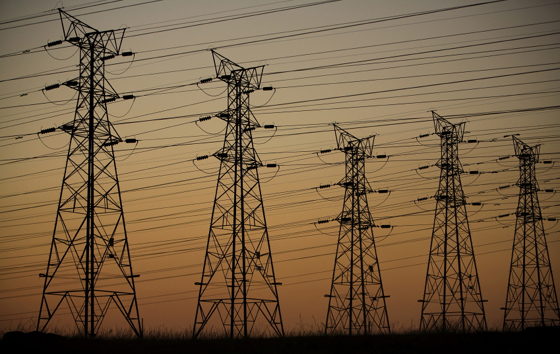
26 November 2008 - Last week the Virginia Commission on Energy and the Environment held a day long meeting to hear testimony on the future role of electricity in the commonwealth.

Representatives of the various power companies serving the state testified as to their plans and their commitment to reaching the state's goal of reducing electricity consumption by 10 percent by 2022. As it turns out, this goal turns out to be murky as nobody ever said what the 10 percent should be based on - 10 percent of current consumption so that the state is actually using 10 percent less 14 years from now, or 10 percent less than what 2022 consumption would be if no efforts to conserve electricity were undertaken. In the latter case the state could actually be burning considerably more electricity in 2022 as the state's population is expected to grow and it is likely that a lot of electric or plug-in hybrid cars will be refueling off the electric grid by then. More >>>

Tuesday, November 25, 2008

Growth in alternative energy market not about to stop


November 25, 2008: Renewable energy retailers say the market has been growing steadily since the start of the decade.Janek Skarzynski/AFP/Getty ImagesRenewable energy retailers say the market has been growing steadily since the start of the decade.

The dramatic slide in oil prices has caused many to speculate that renewable energy has gone from the "next big thing" to the latest "has been." But renewable energy retailers tell a different story. The alternative energy market, they say, has been growing steadily since the start of the decade and it is not about to stop.
Kevin Pegg, president of retailer and project developer EA Energy Alternatives Ltd. in Victoria, has noticed "a dramatic shift" in the market since he first entered the industry 16 years ago. Back then, people would stare at him blank faced when he spoke of a solar panel. But since 2000, he says, wind, solar and hydro have become household names. More >>>

Sunday, November 23, 2008

Urgent Action On International Coral Reef Crisis Urged


ScienceDaily (Nov. 21, 2008) — Coral reef scientists and policy makers from the world’s most prominent coral reef nations are meeting in Australia this week to develop urgent action plans to rescue the world’s richest centre of marine biodiversity from gradual decline.

Human pressures on the Coral Triangle have raised grave concerns about the future of its fish, corals and other sea life, leading to a proposal by Indonesian President Susilo Bambang Yudhoyono for joint action by six governments, scientists, agencies and environmental non-government organisations of the region.

Marine scientists from the Australian Research Council Centre of Excellence for Coral Reef Studies (CoECRS) at James Cook University and the Australian Institute of Marine Science (AIMS) are assisting the largest reef conservation program ever undertaken, known as the Coral Triangle Initiative on Coral Reefs, Fisheries and Food Security.More >>>

Saturday, November 22, 2008

State Funerals Honour Two of Cayman's Visionaries


George Town - November 21, 2008: The Cayman Islands experienced a changing of the guard this week as two of the country’s elder statesmen were laid to rest with the honour of full state funerals.

William Warren Conolly, known to all as Mr Warren, was bade farewell on Sunday, 16 November in his home district of East End following a service at the East End United Church.

Sir Vassel Godfrey Johnson, fondly called Sir Vassel, received accolades and tributes at a memorial on Tuesday, 18 November at the historic Elmslie United Church in George Town.

Both men have been recognised as nation builders and engineers of economic prosperity through the development of the country’s two main industries – financial services and tourism.

[We to pay tribute to these two visionary gentlemen who were so instrumental in putting the Cayman Islands on the map. We bemoan however, the fact the world today lacks statesmen of vision like these two, who‘s selfless service benefited the many. Ed] More >>>

Tuesday, November 18, 2008

Energy security 'must not be excuse to expand coal power'

Government must not allow construction of coal power stations without carbon capture storage, say researchers

The government should not use energy security as an excuse to build unabated coal power plants, according to a study by energy and climate experts.

Investment should instead be focused on the country's gas power network to keep energy supplies secure while keeping a check on rapid increases in carbon emissions over the next decade, policy researchers have said.

Jim Watson, a climate and energy researcher at the University of Sussex, said that for the government to stay on a path to reduce CO2 emissions by 80% by 2050, it must not allow the construction of new coal-fired stations simply with the promise that they might be retrofitted with carbon capture and storage technology (CCS) when that has been proven to work. More >>>

Wednesday, November 12, 2008

Obama will act quickly on climate change: adviser


WASHINGTON Wed Nov 12, (Reuters) - President-elect Barack Obama will act against climate change early in his presidency, an environment adviser said on Wednesday amid doubts that a U.S. carbon-capping program will be in place before 2010.

"The president-elect will move quickly on climate change," Jason Grumet, the Obama campaign's lead energy and environment adviser, told a conference on carbon trading.

Grumet, who has been mentioned as a possible choice for the new U.S. administration's energy secretary, told the group of business and policy-making specialists: "My suggestion to all of you is to enjoy the holiday season ... and rest up because I think it's going to be a very, very busy 2009." More >>>

Sunday, November 9, 2008

UN seeks broad Obama role on climate


BEIJING - November 9, 2008 - The head of the UN climate change body has called on the United States to take a more active role in fighting global warming once Barack Obama becomes president.

"With President-elect Obama, my hope is that the US can take on a leadership role and help to move the negotiations forward," said Yvo de Boer, executive director of the UN Framework Convention on Climate Change.

He spoke at a UN-sponsored climate change conference in China's capital that concluded yesterday. The meeting focused on technology transfers between nations, including setting up public-private partnerships that could help developing countries pay for improved energy systems.

Another UN conference is set for early December in Poland, at which countries will begin negotiations for a climate change accord to succeed the 1997 Kyoto Protocol, which expires in 2012.

The United States rejected the Kyoto accord, arguing that it would harm American business and made no comparable demands on emerging economies. China, India, and other large developing countries signed the accord but refused to accept a binding agreement they said would limit their development and ability to ease poverty at home.

Obama has said he wants to make the United States a leader on climate change and reengage with the UN Framework Convention on Climate Change, the parent treaty of the Kyoto accord. He said he plans to introduce emissions caps to the United States and reduce greenhouse gas emissions by 80 percent by 2050.
More >>>

Friday, November 7, 2008

Al Gore Group Urges Obama To Create US Power Grid


WASHINGTON - Nov 7 2008- Al Gore's Alliance for Climate Protection has some environmental advice for the incoming Obama administration: focus on energy efficiency and renewable resources, and create a unified U.S. power grid.

[Former U.S. vice president Al Gore delivers a speech at the Guggenheim museum in Bilbao October 16, 2008. (REUTERS/Alfredo Aldai/Pool)]Former U.S. vice president Al Gore delivers a speech at the Guggenheim museum in Bilbao October 16, 2008. (REUTERS/Alfredo Aldai/Pool)
On Thursday, the group Gore founded rolled out a new media campaign to push for immediate investments in three energy areas it maintains would help meet Gore's previously announced challenge to produce 100 percent clean electricity in the United States in a decade.
Pegged to Obama's election victory on Tuesday, the Gore group's ads on television, in newspapers and online, pose the question, "Now what?"
"Our nation just made history," one video says. "We have an historic opportunity to boost our economy and repower America with 100 percent clean electricity within 10 years. It will create new American jobs, end our addiction to dirty coal and foreign oil and solve the climate crisis."

More information on the campaign is available online at repoweramerica.org. More >>>

Tuesday, November 4, 2008

Tourism Sector Can Be Harmfully Affected By Climate Change - Premier Warns

Premier Hon. Ralph T. O'Neal, OBE has warned that the BVI tourism sector can be negatively impacted by the effects of Climate Change which is a major source of revenue of the Islands.

The Premier made this comment during his radio message in light of Caribbean Tourism Day which is being observed under the theme “Tourism -- Responding to the Challenge of Climate Change”.

“Our beaches on Virgin Gorda, Peter Island, Tortola, Anegada, Jost Van Dyke or even Marina Cay can be excessively eroded by rising sea-levels which will also negatively impact our beachfront properties, making us less appealing to the millions of tourists who travel to the Caribbean every year. The natural coral reefs with which we have been so abundantly blessed and which visitors enjoy viewing on diving expeditions, could come under severe pressure.”

- Photo Credit: File -
Against this backdrop, the Hon. O’Neal urged that residents pay close attention to the issue which he said is the much talked about phenomenon.

“I urge you my fellow residents of these beautiful Virgin Islands not to dismiss climate change as a distant concept but to recognise its relevance and potential impact on tourism. The tourism industry represents a major part of our livelihood here in the Virgin Islands and any significant climatic changes could negatively impact the industry upon which we rely so heavily for revenue,” the Premier urged.

Hon. O’Neal took the opportunity to mention his government's pro-active efforts to work on ways of mitigating the effects of Climate Change. More >>>

Thursday, October 30, 2008

Climate Change Seeps Into The Sea


ScienceDaily (Oct. 30, 2008) — Good news has turned out to be bad. The ocean has helped slow global warming by absorbing much of the excess heat and heat-trapping carbon dioxide that has been going into the atmosphere since the start of the Industrial Revolution.

All that extra carbon dioxide, however, has been a bitter pill for the ocean to swallow. It's changing the chemistry of seawater, making it more acidic and otherwise inhospitable, threatening many important marine organisms. More >>>

Sunday, October 26, 2008

New Coral Reef Discovered In The Seychelles


ScienceDaily (Oct. 24, 2008) — Researchers from the Department of Biological Sciences have discovered a previously unknown coral reef in the Seychelles. Dr Dave Smith and Dr Dave Suggett visited Curieuse Island as part of an ongoing study funded by Mitsubishi Corporation in conjunction with the Earthwatch Institute. They were joined by PhD student Seb Hennige as well as local Seychelles collaborators.

The island, which is managed by the Seychelles Centre of Marine Research and Technology-Marine Protected Areas (SCMRT-MPA), is home to over 200 giant tortoises but it was thought no coral reefs were present.
Dr Smith said: ‘Diving revealed an extensive coral reef to the south of the island, at a depth which would not be visible to the occasional snorkeller.’ As well as discovering the reef, Dr Smith and Dr Suggett found signs of destruction, and subsequent recovery, caused by the 2004 tsunami. More >>>

Friday, October 24, 2008

OPEC Announces Big Production Cuts

October 24: Oil prices plunge nearly $5, to $63 a barrel, even while OPEC shows "solidarity" by announcing a 1.5 million-barrel-per-day production cut

Through the nine years of ever-increasing oil prices, OPEC snoozed, faintly uneasy with the damage high prices were doing to its customers' economies but content to reap the windfall. Now, with prices having fallen by close to 60% from their July peak of $147 per barrel, the Vienna-based organization is waking up, if not panicking.

On Oct. 24, OPEC announced production cuts of 1.5 million barrels per day. And to try to make the cuts credible, the organization spelled them out for each member, including Angola, which has recently joined and agreed to give up 99,000 barrels per day. "These are real cuts, not B.S.," says Vera Deladoucette, an analyst at Cambridge Energy Research Associates, who was attending the meeting. "Prices close to $60 per barrel concentrated the minds of people." More >>>

Tuesday, October 21, 2008

Climate Change on the Agenda

Cayman's efforts to adapt to climate change will advance next week with a training workshop involving local multi-sector and regional climate change officials.

The two-day (21-22 October) Vulnerability and Capacity Assessment (VCA) Training Workshop at the Grand Cayman Marriott Resort will see stakeholders from Cayman's public and private sector, and NGOs being trained to assess the potential impact of climate change on tourism and other sectors.
The workshop has been organized by the Cayman Islands Department of Environment (DoE); the UK Department for International Development (DFID) and the Caribbean Community Climate Change Centre (CCCCC). More >>>

Monday, October 20, 2008

We need to go for alternative energy – Malta PM

“We need to go for alternative energy on a national level,” said Prime Minister Lawrence Gonzi yesterday at the closing of the Nationalist Party general council held at the party headquarters in Pieta.

Dr Gonzi said the energy problem can be overcome by tackling it at national level.

To this end, the government proposed a wind farm on Sikka l-Bajda. He explained that a wind farm on the shallow reef, off Mellieha’s Irdum tal-Madonna, will help the country produce enough energy for 21,000 households, that is five per cent of the country’s energy needs.

The location was chosen following studies of technologies suitable for reefs of different depths. The Prime Minister said Malta was not ready to embark on farms positioned in deeper waters. More >>>

Saturday, October 18, 2008

Cost of biodiversity loss is greater than that of the world's current financial problems

Forest, Wildlife Protection Pledged at World Conservation Congress
BARCELONA, Spain, October 14, 2008 (ENS) - The cost of biodiversity loss is greater than that of the world's current financial problems and in many cases, the loss of species is irreparable, said the International Union for Conservation of Nature today at the close of its 10 day World Conservation Congress.

"We're showing how saving nature must be an integral part of the solution for any world crisis," said IUCN Director General Julia Marton-Lefevre. ""The clear message coming out of this meeting is that biodiversity underpins the well-being of human societies and their economies."

"But conservation can only succeed if we attack the underlying causes of biodiversity loss, and action is taken at the same time to reduce the impacts of that loss," she said.

"The tide is turning in our favor, we have the scientific knowledge and we have the governmental willpower to put the solutions in place," said IUCN's new President Ashok Khosla of India, who will preside until the next Congress is held in 2012. More>>>

Tuesday, October 14, 2008

Traditional light bulbs to be phased out from March

From next year traditional light bulbs are to be phased out of shops in Ireland, the Minister for the Environment has said. John Gormley said the move was to help reduce greenhouse gases as well as cut the energy bills of consumers who were feeling the pinch of the economic crisis.

The phasing out of the old style bulbs will be done in a four stage process up until 2012, beginning in March 2009. Bulbs which have an electrical power consumption of 75 watts or higher will be removed from the shelves first, followed by various other types over the next three years.
Sustainable Energy Ireland said that energy efficient light bulbs use 20% of the energy of the older bulbs and can last up to ten times longer if used well. The UK has already begun the process of phasing out old bulbs and hopes to complete it by 2011. More >>>

[All homes and businesses in the Cayman Islands should switch to these bulbs, do not wait for this to be made law, do it now! Not only will it save you money, it will also keep your house cooler as these bulbs generate less heat! The new bank of Butterfield building at Butterfield Place uses high efficiency bulbs throughout the building, Editor]

Saturday, October 11, 2008

Malta Government announces measures to protect the water table

Tuesday, 7th October 2008 - The government has published legal notices providing that no new boreholes may be drilled for ground water extraction and all boreholes which have not been already registered with the authorities have to be registered within a month.

Resources Minister George Pullicino said Malta needed to protect its ground water and give the water table time to recharge itself. It was estimated that ground water would be sustainable if extraction did not exceed 23 million cubic metres annually, yet that number was being exceeded by 11 million cubic metres every year.

He warned that all those who did not register their boreholes within a month would be liable for a fine of between €9,300 and €18,600 in terms of a law enacted in 1997. Registering a borehole did not mean an automatic right to extract groundwater, the minister said.

Furthermore, no new boreholes may be drilled without prior permission from the Malta Resources Authority.

For the time being, however, no new permits would be granted until the situation was assessed and the water table was allowed to re-establish itself.

Anyone drilling boreholes illegally would be liable for a fine of between €20,000 and €50,000 and equipment would be confiscated. More >>>

[If I were building a home in the Cayman Islandsor anywhere today I would construct a tank or cistern to collect my rain water from my roof. This was the traditional norm in many parts of the world prior to mains water systems. In this time of growing water shortages around the world it seems criminal to waste the wonderful rain water, which is free. For those who remember hurricane Ivan you will also remember the lack of running water. As more of our land area becomes paved for roads and parking lots there is correspondingly less water being replenished into the acquifer. Perhaps there needs to be, or maybe there is, a permeable paving system to allow water to pass through it. Ed]


Wednesday, October 8, 2008

Forests Play Vital Role In Fighting Climate Change

International consensus on forests’ vital role in fighting climate change

Barcelona, Spain, 8 October, 2008 (IUCN)– The world’s forests have immense potential to lessen the impacts of climate change, but if this opportunity is going to be realized, unified global action is now required, according to a remarkable alliance of international forest leaders
.

The Forests Dialogue’s Initiative on Forests and Climate Change brought together more than 250 representatives of governments, forestry companies, trade unions, environmental and social groups, international organizations, forest owners, indigenous peoples and forest-community groups in a series of meetings over 10 months. For the first time, the group has agreed on five guiding principles for climate change negotiators. More >>>

Monday, October 6, 2008

Companies 'need green directors'


Businesses must change their attitude to environmental issues if the tide of ecological decline is to be halted. That was the message from Valli Moosa, president of the International Union for the Conservation of Nature, opening the World Conservation Congress.

The former South African minister said all companies should have directors with environmental experience. The 10-day IUCN congress in Barcelona will debate global environmental problems and potential solutions. The organisation numbers almost all the world's governments, environment groups and business representatives among its members. More >>>

Saturday, October 4, 2008

Coral Reefs Need Deep CO2 Cutbacks Soon

How much carbon dioxide is too much? According to the UN Framework Convention on Climate Change, greenhouse gases in the atmosphere need to be stabilized at levels low enough to “prevent dangerous anthropogenic interference with the climate system.”

but scientists have come to realize that an even more acute danger than climate change is lurking in the world's oceans—one that is likely to be triggered by co2 levels that are modest by climate standards. ocean acidification could devastate coral reefs and other marine ecosystems even if atmospheric co2 stabilizes at 450 ppm, a level well below that of many climate change forecasts, report long cao and ken caldeira. More >>>

Friday, October 3, 2008

The vicious circle

October 2, 2008: At the time of the First World War, Winston Churchill formulated the fundamental principle of energy security as follows: "Safety and certainty in oil lie in variety and variety alone."

While the actual concept of "energy security" appeared only much later - during the oil crises of the 1970s - the wisdom of his words is widely regarded to this day as immutable. But in recent years, the tendency to put all one's eggs in one basket has increasingly undermined the long-term security of natural-gas supplies. Producers and consumers have been recklessly playing at "lose-lose."
The issue has become one of the most heatedly discussed items on the international agenda, even though the proportion of gas crossing international borders is far lower than that of oil (28 percent and 58 percent respectively). More>>>
[Energy security also applies to the Cayman Islands and all Small Island Developing States who must diversify into alternative energy. Solar, wind, and geo-thermal are all viable options that will cut costs and insulate your homes and countries from energy shortages. Ed]

Saturday, September 27, 2008

Mobilizing to Save Civilization: What You and I Can Do

One of the questions I am frequently asked when I am speaking in various countries is, given the environmental problems that the world is facing, can we make it? That is, can we avoid economic decline and the collapse of civilization? My answer is always the same: it depends on you and me, on what you and I do to reverse these trends. It means becoming politically active. Saving our civilization is not a spectator sport.

We have moved into this new world so fast that we have not yet fully grasped the meaning of what is happening. Traditionally, concern for our children has translated into getting them the best health care and education possible. But if we do not act quickly to reverse the earth’s environmental deterioration, eradicate poverty, and stabilize population, their world will decline economically and disintegrate politically. More >>>

Monday, September 22, 2008

Energy Efficiency Crucial to Achieving Energy Security and Reducing Global Warming, States Leading Scientists Report

American Physical Society Report Says Using Energy Wasted Now From Inefficiencies Is America's Hidden Energy Reserve for 21st Century

WASHINGTON, DC, Sep 16, 2008 -- Eliminating wasted energy from automobiles, homes and businesses is equivalent to tapping a hidden energy reserve that will help the United States improve its energy security and reduce global warming, an American Physical Society (APS) study panel concluded in a major report released today.
More >>>

Sunday, September 7, 2008

Join The UN’s International Day of Peace

The United Nations' International Day of Peace - marked every year on September 21 - is a global holiday when individuals, communities, nations and governments highlight efforts to end conflict and promote peace.

Established by U.N. resolution in 1982, "Peace Day" has grown to include millions of people around the world who participate in all kinds of events, large and small.

For 2008, this new Web site makes it easy to find and promote Peace Day events anywhere in the world. Just click on "Participate!" to locate an event or post information. And explore the rest of the site to learn more about Peace Day and how to get involved.

May peace prevail on Earth! More>>>

[Let those of us in all communities, including the Cayman Islands take time to end conflicts and promote friendly relations with our neighbours. Editor]

Tuesday, September 2, 2008

Lost World Beneath Caribbean To Be Explored

ScienceDaily (Sep. 1, 2008) — Scientists at the National Oceanography Centre, Southampton, are set to explore the world's deepest undersea volcanoes and find out what lives in a 'lost world' five kilometres beneath the Caribbean.

The team of researchers led by Dr Jon Copley has been awarded £462,000 by the Natural Environment Research Council to explore the Cayman Trough, which lies between Jamaica and the Cayman Islands. This rift in the Caribbean seafloor plunges to a depth of more than 5000 metres below sea level. It contains the world's deepest chain of undersea volcanoes, which have yet to be explored.
More >>>

Friday, August 29, 2008

Developing Nations Discuss Ways to Fight Climate Change

Dakar - 28 August 2008 - The delegates at the U.N. conference on climate change in Ghana say they are pleased with the progress made after a week of negotiations. Brent Latham reports from our West Africa bureau in Dakar, the parties hope to shape a new global environmental regime to further incorporate African countries in the fight against global warming.

The U.N.-sponsored meeting in Accra was one in a series aimed at forging a deal to replace the Kyoto protocol, which expires at the end of 2012, and was never fully embraced.

The process has sped up, and parties have become more serious about reaching an agreement, said executive secretary of the U.N. Framework Convention on Climate Change. Yvo de Boer said that time is running out to come to reach an accord on climate change, and that he witnessed a growing sense of urgency at the conference. More >>>

Sunday, August 24, 2008

Climate Change from Pacific Islands

Climate change is wreaking havoc and there is an urgent need to help island communities at risk of being submerged by rising waters

That was the warning from the leader of the tiny Pacific Island of Niue, as regional leaders gathered on the island for their annual summit. More >>>

Friday, August 22, 2008

Climate Change Could Be Impetus For Wars, Other Conflicts, Expert Says

ScienceDaily (Aug. 22, 2008) — Hurricane season has arrived, sparking renewed debate regarding possible links between global warming and the frequency and severity of hurricanes, heat waves and other extreme weather events.

Meanwhile, a related discussion has ensued among international-security experts who believe climate-change-related damage to global ecosystems and the resulting competition for natural resources may increasingly serve as triggers for wars and other conflicts in the future.

Jürgen Scheffran, a research scientist in the Program in Arms Control, Disarmament and International Security and the Center for Advanced BioEnergy Research at the University of Illinois, is among those raising concerns. In a survey of recent research published earlier this summer in the Bulletin of the Atomic Scientists, Scheffran concluded that “the impact of climate change on human and global security could extend far beyond the limited scope the world has seen thus far.” More >>>

Tuesday, August 19, 2008

Pacific Islands Forum leaders fly in to discuss climate change

ALOFI, Niue, Aug. 18 (Xinhua) -- As last-minute preparation work is being carried out in the small island nation of Niue, heads of the government from guest countries are landing here for the Pacific Islands Forum (PIF) summit to be held from Tuesday to Thursday.

As a key political and economic policy organization in the Pacific, the 16-member PIF meets annually to develop collective responses to regional issues. When leaders meet this week in the isolated coral atoll thousands of kilometers north-east of New Zealand, climate change and Fiji's stalled election process will top the agenda.

The effect of "global warming" has been a threat to food security and safety of island communities. As a consequence, many Forum Island countries are already subjected to sea level rising.

"It is hoped that Niue as host will take the lead in navigating change to combat the overwhelming effects of climate change and to encourage the PIF to raise its stance on the issues of climate change and not just paying lip-service but be active and promoting all means of renewable energy, recycling, re-use and so forth," the Niue government said in its website for the summit. More >>>

Friday, August 15, 2008

France's Reunion island aims for zero CO2

Wed Aug 13, 2008 - SAINT-DENIS DE LA REUNION (Reuters) - Ringed by volcanic rock, sandy beaches and the blue swell of the Indian Ocean, France's Reunion island is hardly a major polluter.

But hit by rising fuel costs and worried about the impact of global warming, particularly on its delicate flora and fauna, the small island nation has set itself the ambitious goal of cutting its greenhouse gas emissions to zero.

By 2025, the French territory wants to use renewable energy sources to produce 100 percent of its electricity, and to power all of its transport by 2050.

"We have water, sunshine, we even have an active volcano. We have more energy than we need for our development," Paul Verges, president of Reunion's regional council, said after Group of Eight (G8) leaders agreed a 50 percent cut in carbon dioxide (CO2) emissions by 2050 More >>>

Thursday, August 14, 2008

Mass Extinctions And 'Rise Of Slime' Predicted For Oceans

ScienceDaily (Aug. 13, 2008) — Human activities are cumulatively driving the health of the world's oceans down a rapid spiral, and only prompt and wholesale changes will slow or perhaps ultimately reverse the catastrophic problems they are facing.

Such is the prognosis of Jeremy Jackson, a professor of oceanography at Scripps Institution of Oceanography at UC San Diego, in a bold new assessment of the oceans and their ecological health. Jackson believes that human impacts are laying the groundwork for mass extinctions in the oceans on par with vast ecological upheavals of the past.

He cites the synergistic effects of habitat destruction, overfishing, ocean warming, increased acidification and massive nutrient runoff as culprits in a grand transformation of once complex ocean ecosystems. More >>>

Tuesday, August 12, 2008

GLOBAL: What we are doing about climate change


Photo: UN Library
Years of poorly regulated emissions have made the earth warmer
JOHANNESBURG, 5 August 2008 (IRIN) - In developing countries, where survival is often a daily struggle, people cannot afford to wait for their government to bail them out. Many are living in the grip of climate change, coping with frequent droughts, heavy flooding, intense cyclones and other extreme weather events, and have found ways to adapt:

- In Bangladesh, women farmers faced with frequent floods are building 'floating gardens' — hyacinth rafts on which to grow vegetables in flood-prone areas.

- In Sri Lanka, farmers are experimenting with rice varieties that can cope with less water and higher levels of salinity in the water.

- In Malawi, some small-scale farmers dependent on rain-fed agriculture have begun planting faster maturing maize to cope with more frequent droughts.

But, on a global scale governments continue to be deadlocked on the issue of reducing the emission of dangerous greenhouse gases, such as water vapour, carbon dioxide, ozone and methane, which are making the earth warmer. According to the UN World Meteorological Organisation (WMO), the decade from 1998 to 2007 was the warmest on record.More >>>

Saturday, August 9, 2008

Sub to make deep dive in Cayman Trench

Sub to make deep Caribbean dive

August 9 2008: Scientists are set to explore the world's deepest undersea volcanoes, which lie 6km down in the Caribbean. Delving into uncharted waters to hunt for volcanic vents will be Autosub6000, Britain's new autonomously controlled, robot submarine. Once found, the life, gas and sediment around the vents - the world's hottest - will be sampled and catalogued.

The research will be carried out by a British team aboard the UK's latest research ship, the James Cook.
"We are heading out on two expeditions, each close to a month long, to map the full length of the Cayman Trough," said team leader, Dr Jon Copley of the National Oceanography Centre in Southampton (NOCS).
Dr Copley explained that the Cayman Trough, which lies between Jamaica and the Cayman Islands, is a product of the Caribbean tectonic plate pulling away from the American plate.

"It is the world's deepest volcanic ridge and totally unexplored," the Southampton-based researcher told BBC News. More >>>

Wednesday, August 6, 2008

First 100 Percent Wind-powered Community In U.S.

Rock Port, Missouri is the first one hundred percent wind powered community in the United States

ScienceDaily (July 16, 2008) — Rock Port Missouri, with a population of just over 1,300 residents, has announced that it is the first 100% wind powered community in the United States. Four wind turbines supply all the electricity for the small town.
Rock Port’s 100% wind power status is due to four wind turbines located on agricultural lands within the city limits of Rock Port (Atchison County). The city of Rock Port uses approximately 13 million kilowatt hours of electricity each year. It is predicted that these four turbines will produce 16 million kilowatt hours each year. More >>>

Sunday, August 3, 2008

Caribbean Community Climate Change Centre

CCCCC Mission Statement:

Through its role as a Centre of Excellence, the Centre will support the people of the Caribbean as they address the impact of climate variability and change on all aspects of economic development through the provision of timely forecasts and analyses of potentially hazardous impacts of both natural and man-induced climatic changes on the environment, and the development of special programmes with create opportunities for sustainable development.

Introduction:

The Caribbean Community Climate Change Centre coordinates the Caribbean region’s response to climate change. Officially opened in August 2005, the Centre is the key node for information on climate change issues and on the region’s response to managing and adapting to climate change in the Caribbean. More >>>

Friday, August 1, 2008

Harsh Climate Change Once Fell Swiftly

Aug. 1, 2008 -- It's one of the most dramatic examples of climate change in Earth's history, and scientists now say it happened almost entirely in one year's time.

Thirteen thousands years ago, Europe was much like it is today -- cool but temperate, with great forests carpeting the land. Ice sheets still nibbled at Finland and Sweden, but for much of the continent the last Ice Age was a distant memory. Suddenly, the climate went haywire. Warm Gulf Stream currents that brought heat from the equator up toward the pole began to fail. Temperatures plummeted 3 to 4 degrees Celsius, and stayed that way for a millennium.

Now scientists believe they've pinpointed the exact time the northern hemisphere was plunged back into a deep freeze. Examining sediments preserved at the bottom of a remote lake in western Germany, they found that what's known as the Younger Dryas cold period took just a year to sweep across the continent, starting in the autumn, 12,679 years ago. More >>>

Monday, July 28, 2008

Population Policy Needed In Order To Combat Climate Change, Experts Argue

ScienceDaily (July 28, 2008) — The biggest contribution UK couples can make to combating climate change would be to have only two children or at least have one less than they first intended, argues an editorial published in the British Medical Journal.

Family planning and reproductive health expert Professor John Guillebaud and Dr Pip Hayes, a GP from Exeter, call on UK doctors to break their silence on the links between population, family planning and climate change. They point to a calculation by the Optimum Population Trust that "each new UK birth will be responsible for 160 times more greenhouse gas emissions … than a new birth in Ethiopia."
More >>>

Thursday, July 24, 2008

CUC announces wind project request for expressions of interest

GRAND CAYMAN, Cayman Islands, July 24 2008 - Caribbean Utilities Company, Ltd. today announced that it will formally request expressions of interest from qualified wind generation developers for wind generation project of up to 10 megaWatt ("MW") on the island of Grand Cayman, Cayman Islands.

A formal Request for Expressions of Interest will be posted on the CUC website.

In 2003, CUC completed a 12 month, two-site wind study with the support of an independent consultant. At that time, wind generation was not considered viable based on the measured wind intensity and duration and the lower cost of the prevailing diesel generation. CUC believes that this source of energy may now prove viable with reasonable assumptions regarding future fuel prices, capital costs and operating costs.

CUC currently relies upon diesel generation to produce electricity for Grand Cayman. CUC's power system is comprised of 17 generating units (15 diesel and two gas turbines) with a combined capacity of 136.6 megaWatts.

More >>>

Tuesday, July 15, 2008

28 EU overseas entities join forces for the first time to counter climate change - IUCN

11 July 2008 - For the first time the EU’s overseas entities have come together at a meeting in Reunion Island, calling for action on climate change impacts to help preserve nature, says IUCN (International Union for Conservation of Nature) at the Reunion

Conference on Climate Change and Biodiversity in EU Overseas Entities (7-11 July).

With mounting pressure on the environment and people’s livelihoods better management and research is needed to identify the threats posed by climate change, allowing for appropriate adaptation measures in EU overseas entities. “IUCN is fully aware of the exceptional importance of biodiversity in EU overseas entities when compared with continental Europe, and their particular vulnerability to climate change,” says IUCN Director General Julia Marton-Lefèvre. “Whether in Reunion, Greenland or Tahiti, biodiversity is one of the main assets for the well-being of the populations and the economic development of these territories.” More >>>

Monday, July 14, 2008

Energy-Addicted US Can Learn a Lot From Europe

A few days before we flew to Barcelona last month to attend a wedding, international headlines filled with news that truckers had blocked roadways leading to Spain’s major cities, leaving some store shelves bare.

The wildcat strike passed, and the wedding went off without a hitch. But the independent truckers’ protest — and subsequent efforts by Spanish farmers to block roadways in protest — bear testament to the pain inflicted by diesel fuel prices that have passed $8 a gallon and continue to climb. Gasoline prices in Europe are even higher, roughly 1.5 euros per liter for regular in the French countryside last month or about $8.50 a gallon. But petrol, as it's called, has always cost a lot more in Europe, in large part because of much higher taxes at the pump. That’s right, $8 a gallon. More >>>

Friday, July 11, 2008

One-third Of Reef-building Corals Face Extinction from climate change

ScienceDaily (July 11, 2008) — A third of reef-building corals around the world are threatened with extinction, according to the first-ever comprehensive global assessment to determine their conservation status. The study findings were published today by Science Express.
Leading coral experts joined forces with the Global Marine Species Assessment (GMSA) -- a joint initiative of the International Union for Conservation of Nature (IUCN) and Conservation International (CI) -- to apply the IUCN Red List Categories and Criteria to this important group of marine species.
"The results of this study are very disconcerting," stated Kent Carpenter, lead author of the Science article, GMSA Director, IUCN Species Programme. "When corals die off, so do the other plants and animals that depend on coral reefs for food and shelter, and this can lead to the collapse More >>>

Thursday, July 10, 2008

Ocean Wind Power Maps Reveal Possible Wind Energy Sources

ScienceDaily (July 10, 2008) — Efforts to harness the energy potential of Earth's ocean winds could soon gain an important new tool: global satellite maps from NASA.

Scientists have been creating maps using nearly a decade of data from NASA's QuikSCAT satellite that reveal ocean areas where winds could produce wind energy.
The new maps have many potential uses including planning the location of offshore wind farms to convert wind energy into electric energy.

"Wind energy is environmentally friendly. After the initial energy investment to build and install wind turbines, you don't burn fossil fuels that emit carbon," said study lead author Tim Liu, a senior research scientist and QuikSCAT science team leader at NASA's Jet Propulsion Laboratory in Pasadena, Calif. "Like solar power, wind energy is green energy." More >>>

Tuesday, July 8, 2008

Southern Ocean Carbon Sink in Trouble?

If you drove to work or school this morning or used electricity to power the computer on which you're looking at this image, chances are you released carbon dioxide, a greenhouse gas, into the atmosphere.
According to the Intergovernmental Panel on Climate Change, people released about 7.8 billion tons (7.8 gigatons) of carbon into the atmosphere in 2005 by burning fossil fuels and making cement, and that number grows every year. What happens to all of the carbon dioxide that people release into the atmosphere? About half stays in the atmosphere, where it warms Earth, and the other half is absorbed by growing plants on land and by the ocean.

As people have put more and more carbon dioxide into the atmosphere, the ocean has responded by soaking up more carbon dioxide—a trend scientists expected to continue for many years. But in 2007, a team of scientists reported in the journal Science that between 1981 and 2004 carbon dioxide concentrations in the Southern Ocean didn’t change at all, even though global atmospheric levels continued to rise. More >>>

Sunday, July 6, 2008

Climate change report like a disaster novel, says Australian minister

July 7, 2008 - A new report by Australia's top scientists predicts that the country will be hit by a 10-fold increase in heatwaves and that droughts will almost double in frequency and become more widespread because of climate change.

The scientific projections envisage rainfall continuing to decline in a country that is already one of the hottest and driest in the world. It says that about 50% of the decrease in rainfall in south-western Australia since the 1950s has probably been due to greenhouse gases.

Yesterday, Australia's agriculture minister, Tony Burke, described the report as alarming and said: "Parts of these high-level projections read more like a disaster novel than a scientific report." More >>>

Saturday, July 5, 2008

British PM: G8 should boost fight against climate change

LONDON, July 5 (Xinhua) -- British Prime Minister Gordon Brown on Saturday called on Britain's Group of Eight (G8) partners to boost their anti-climate change efforts for the sake of their economies.

"The world is suffering a triple challenge: of higher fuel prices, higher food prices and a credit crunch," said Brown in an interview with British newspaper the Guardian.

"My message to the G8 will be that instead of sidelining climate change and the development agenda, the present economic crisis means that instead of relaxing our efforts we have got to accelerate them."

"This agenda is not just the key to the environment and reducing poverty, but the key to our economic future as well," he said. More >>>

Wednesday, July 2, 2008

US Midwest floods show impact of global warming

WASHINGTON, July 1 (Reuters) - Floods like those that inundated the U.S. Midwest are supposed to occur once every 500 years but this is the second since 1993, suggesting flawed forecasts that do not take global warming into account, conservation experts said on Tuesday.

"Although no single weather event can be attributed to global warming, it's critical to understand that a warming climate is supplying the very conditions that fuel these kinds of weather events," said Amanda Staudt, a climate scientist with the National Wildlife Federation. More >>>

Monday, June 30, 2008

Oil rises to record on concerns about Iran

LONDON: June 30, 2008: Crude oil rose to a record above $143 a barrel on Monday on speculation the dispute over Iran's nuclear program may disrupt supply from the second-largest OPEC producer.

Pressure on Iran to end its uranium enrichment program and the falling value of the U.S. dollar may drive prices to $170 a barrel, the president of the Organization of Petroleum Exporting Countries, Chakib Khelil, said Saturday. Oil is headed for its biggest six-month gain since 1999 as investors shun equities for commodities, looking for a hedge against a weaker dollar and quickening inflation. More >>>