Wednesday, November 26, 2014

World Resources Institute Publishes Renewable Energy Cost Comparison Factsheet

17 November 2014: The World Resources Institute (WRI) has launched a factsheet that enables better cost comparisons of electricity from renewables and fossil fuels by identifying key factors to consider, namely: type of user; supply options; and factors that impact additional costs and benefits, such as environmental risks or financial incentives.

The publication, titled ‘Understanding Renewable Energy Cost Parity,' seeks to provide a simple, "go-to" resource for information on appropriate comparisons of renewable and "traditional" electricity supply options. The factsheet constitutes the first in a series of three publications that aim to support clarity and precision in cost analyses of renewable energy options made by decision makers in companies, residences, governments and advocacy organizations. In particular, the guide is intended for electricity buyers looking for financial savings, and electricity system planners, regulators and policy makers seeking economic and social benefits for end-users.

The publication argues that, in order for decision makers to know where and when renewable energy is the cheapest solution, they should establish: "with what should a renewable energy option be compared"; and "which factors need to be considered in determining cost parity."

Among the publication's key messages are that: for end-use consumers, on-site generation is cost-competitive when its average cost of energy is lower than or equal to the retail electricity price over the project's lifetime; for large industrial and/or commercial consumers, power purchase agreements (PPAs) are cost-competitive when the price paid for generated electricity is lower than or equal to the retail electricity price over the project's lifetime or contract; and, for utilities and other wholesale buyers, a renewable energy project is cost-competitive if its cost of energy and/or risk is lower than or equal to that of other technologies providing the same service during the same period of time.

The factsheet also argues for the need to take into account potential additional factors, including fluctuations in electricity prices, different time periods used in comparisons, assumptions and methodologies relating to levelized cost of energy (LCOE) calculations, technology-specific subsidies, possible PPAs, and costs of compliance with environmental regulations. [WRI Blog Post] [WRI Publication Webpage] [Publication: Understanding Renewable Energy Cost Parity] More


Saturday, November 15, 2014

Fearing Bombs That Can Pick Whom to Kill

On a bright fall day last year off the coast of Southern California, an Air Force B-1 bomber launched an experimental missile that may herald the future of warfare.

LRAS Missile launched from B-1 bomber

Initially, pilots aboard the plane directed the missile, but halfway to its destination, it severed communication with its operators. Alone, without human oversight, the missile decided which of three ships to attack, dropping to just above the sea surface and striking a 260-foot unmanned freighter.

Warfare is increasingly guided by software. Today, armed drones can be operated by remote pilots peering into video screens thousands of miles from the battlefield. But now, some scientists say, arms makers have crossed into troubling territory: They are developing weapons that rely on artificial intelligence, not human instruction, to decide what to target and whom to kill.

As these weapons become smarter and nimbler, critics fear they will become increasingly difficult for humans to control — or to defend against. And while pinpoint accuracy could save civilian lives, critics fear weapons without human oversight could make war more likely, as easy as flipping a switch.

Britain, Israel and Norway are already deploying missiles and drones that carry out attacks against enemy radar, tanks or ships without direct human control. After launch, so-called autonomous weapons rely on artificial intelligence and sensors to select targets and to initiate an attack.

Britain’s "fire and forget" Brimstone missiles, for example, can distinguish among tanks and cars and buses without human assistance, and can hunt targets in a predesignated region without oversight. The Brimstones also communicate with one another, sharing their targets.

Armaments with even more advanced self-governance are on the drawing board, although the details usually are kept secret. "An autonomous weapons arms race is already taking place," said Steve Omohundro, a physicist and artificial intelligence specialist at Self-Aware Systems, a research center in Palo Alto, Calif. "They can respond faster, more efficiently and less predictably."

Concerned by the prospect of a robotics arms race, representatives from dozens of nations will meet on Thursday in Geneva to consider whether development of these weapons should be restricted by the Convention on Certain Conventional Weapons. Christof Heyns, the United Nations special rapporteur on extrajudicial, summary or arbitrary executions, last year called for a moratorium on the development of these weapons.

The Pentagon has issued a directive requiring high-level authorization for the development of weapons capable of killing without human oversight. But fast-moving technology has already made the directive obsolete, some scientists say.

"Our concern is with how the targets are determined, and more importantly, who determines them," said Peter Asaro, a co-founder and vice chairman of the International Committee for Robot Arms Control, a group of scientists that advocates restrictions on the use of military robots. "Are these human-designated targets? Or are these systems automatically deciding what is a target?"

Weapons manufacturers in the United States were the first to develop advanced autonomous weapons. An early version of the Tomahawk cruise missile had the ability to hunt for Soviet ships over the horizon without direct human control. It was withdrawn in the early 1990s after a nuclear arms treaty with Russia.

Back in 1988, the Navy test-fired a Harpoon antiship missile that employed an early form of self-guidance. The missile mistook an Indian freighter that had strayed onto the test range for its target. The Harpoon, which did not have a warhead, hit the bridge of the freighter, killing a crew member.

Despite the accident, the Harpoon became a mainstay of naval armaments and remains in wide use.

In recent years, artificial intelligence has begun to supplant human decision-making in a variety of fields, such as high-speed stock trading and medical diagnostics, and even in self-driving cars. But technological advances in three particular areas have made self-governing weapons a real possibility.

New types of radar, laser and infrared sensors are helping missiles and drones better calculate their position and orientation. "Machine vision," resembling that of humans, identifies patterns in images and helps weapons distinguish important targets. This nuanced sensory information can be quickly interpreted by sophisticated artificial intelligence systems, enabling a missile or drone to carry out its own analysis in flight. And computer hardware hosting it all has become relatively inexpensive — and expendable.

The missile tested off the coast of California, the Long Range Anti-Ship Missile, is under development by Lockheed Martin for the Air Force and Navy. It is intended to fly for hundreds of miles, maneuvering on its own to avoid radar, and out of radio contact with human controllers.

In a directive published in 2012, the Pentagon drew a line between semiautonomous weapons, whose targets are chosen by a human operator, and fully autonomous weapons that can hunt and engage targets without intervention.

Weapons of the future, the directive said, must be "designed to allow commanders and operators to exercise appropriate levels of human judgment over the use of force."

The Pentagon nonetheless argues that the new antiship missile is only semiautonomous and that humans are sufficiently represented in its targeting and killing decisions. But officials at the Defense Advanced Research Projects Agency, which initially developed the missile, and Lockheed declined to comment on how the weapon decides on targets, saying the information is classified.

"It will be operating autonomously when it searches for the enemy fleet," said Mark A. Gubrud, a physicist and a member of the International Committee for Robot Arms Control, and an early critic of so-called smart weapons. "This is pretty sophisticated stuff that I would call artificial intelligence outside human control."

Paul Scharre, a weapons specialist now at the Center for a New American Security who led the working group that wrote the Pentagon directive, said, "It’s valid to ask if this crosses the line."

Some arms-control specialists say that requiring only "appropriate" human control of these weapons is too vague, speeding the development of new targeting systems that automate killing.

Mr. Heyns, of the United Nations, said that nations with advanced weapons should agree to limit their weapons systems to those with "meaningful" human control over the selection and attack of targets. "It must be similar to the role a commander has over his troops," Mr. Heyns said.

Systems that permit humans to override the computer’s decisions may not meet that criterion, he added. Weapons that make their own decisions move so quickly that human overseers soon may not be able to keep up. Yet many of them are explicitly designed to permit human operators to step away from controls. Israel’s antiradar missile, the Harpy, loiters in the sky until an enemy radar is turned on. It then attacks and destroys the radar installation on its own.

Norway plans to equip its fleet of advanced jet fighters with the Joint Strike Missile, which can hunt, recognize and detect a target without human intervention. Opponents have called it a "killer robot."

Military analysts like Mr. Scharre argue that automated weapons like these should be embraced because they may result in fewer mass killings and civilian casualties. Autonomous weapons, they say, do not commit war crimes.

On Sept. 16, 2011, for example, British warplanes fired two dozen Brimstone missiles at a group of Libyan tanks that were shelling civilians. Eight or more of the tanks were destroyed simultaneously, according to a military spokesman, saving the lives of many civilians.

It would have been difficult for human operators to coordinate the swarm of missiles with similar precision.

"Better, smarter weapons are good if they reduce civilian casualties or indiscriminate killing," Mr. Scharre said. More

Editorial

Professor Samdhong Rinpoche,, a leading Tibetan academic stated recently; "Today the challenges of the modernity pose existential threat to mankind and earth itself, if not tackled adequately and immediately. The first major challenge is of VIOLENCE. Its most visible forms are war and terrorism. Then there is the systematic or system generated violence. We are neither able to see it or understand it, but its scope and spread are frightening. The present situation is such that we have no will to resist violence, unless it directly affects us. This kind of violence is market driven which necessitates perpetuation of war or its possibility. In brief the entire world today is being governed by the market forces, which are described consumeristic system". Violence, war and terrorism, along with poverty and disease are governance issues, global governance issies.

As Kofi Annan, then secretary-general of the United Nations (UN), told world leaders in 1998: "Good governance is perhaps the single most important factor in eradicating poverty and promoting development." Governance is the exercise of economic, political, and administrative authority to manage a country's affairs at all levels. Different definitions of good governance have been proposed by development organizations. The definition offered by the UN Development Programme highlights participation, accountability, transparency, consensus, sustainability, the rule of law, and the inclusion of the poorest and most vulnerable people in making decisions about allocating development resources.

All of the above are issues that we have to technology and resources to alleviate. Doing so would remove the necessity to produce weapons as described above, it could do away for the need for the military as we know it today. The world could be like Costa Rica whose military was abolished on December 1, 1948, by President José Figueres Ferrer. Our world could literally become a Paradise or Garden of Eden where peace reigned as everyones needs were fulfilled. Editor.




Saturday, November 8, 2014

Thursday, November 6, 2014

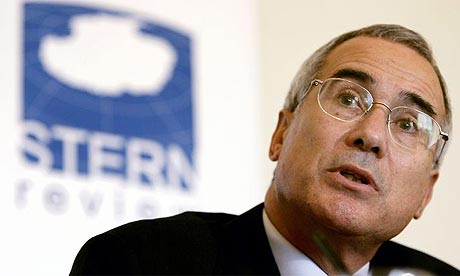
Lord Stern: global warming may create billions of climate refugees

Lord Nicholas Stern, one of the world’s most influential voices on climate economics, does not mince his words when it comes to criticising those who take a narrow view of prosperity and highlighting the devastating consequences of global warming.

Nicholas Stern

"You have to be a complete idiot to think that GDP sums up prosperity," says Stern, who believes we need to develop broader measures of success and combine this with a return to core values if we are to convince people to act to prevent runaway climate change.

Stern, who wrote the landmark 2006 Stern review of the economics of climate change, says if we fail to take heed of the danger signals, we risk temperatures rising this century to levels we haven’t seen for tens of millions of years.

"Hundreds of millions of people, perhaps billions of people would have to move," he warns. "If we’ve learned anything from history that means severe and extended conflict.

"We couldn’t just turn it off. You can’t make a peace treaty with the planet, you can’t negotiate with the laws of physics. You’re in there, you’re stuck. Those are the stakes we’re playing for and that’s why we have to make this second transformation, the climate transformation and move to low carbon economy."

Stern has co-authored the recently published New Climate Economy report, which argues that the world can head off the worst effects of climate change, and enjoy the fruits of continued economic expansion, if it moves quickly to invest in a low-carbon economy.

He says he hopes the study will influence key decision makers because it was written with the support of a coalition of respected politicians, economists, think tanks and institutions, including the World Bank, the International Monetary Fund, the OECD, the International Energy Agency and the UN.

He dismisses the arguments of more radical economists who believe that we need to stop our fixation with growth, arguing that the economy needs to keep expanding if we are to have a hope of eradicating poverty.

"To those who want to knock out growth from objectives, I find they’re close to reprehensible because for me the two defining challenges of this century are overcoming poverty and managing climate change.

"We fail on one, we fail on the other. So I think to say that we should just switch off growth is to miss big aspects of what matters about poverty. And so it worries me. It’s also politically very naive. If you turn it into a pissing contest between growth on the one hand and climate and environment on the other and say you’ve got to choose, you’re setting yourself up for failure."

Stern says investments in renewable energy must be combined with a rethinking of our understanding of prosperity, which he believes will lead to what he terms better growth.

"It means thinking differently about health, about the way we live in our cities and about the strengths of our communities," he says. "It’s not that GDP is idiotic but it’s mostly about the use of labour resources and what it produces. But there are very important parts of this story about prosperity that get missed out."

How does Stern, who is president of the British Academy, believe we can start to measure prosperity that goes beyond GDP?

He says it is vital to start from the perspective of people understanding what they mean by wellbeing and what they value, whether it is family, community, arts or sport.

"You can be reasonably empirical about what moves people and then you go and try to collect data on that," he says. "Once you understand what it is it you’re trying to capture and create indicators, you can then start to talk about policy."

The 68-year-old peer says it’s vital we go back to recognising the importance of Aristotle’s belief in the need to understand what it means to be a virtuous person and to whom we owe a duty of care.

"I’ve been an academic all my life and I look at the evidence of what works and what doesn’t work," he says. "But if you ask yourself what you’re trying to do, that’s spurred by values, by what’s important to you."

For Stern, the heart of his values lies in the importance of family. Speaking immediately after introducing his two-week old granddaughter Rosa on stage at a TEDx talk in New York, he said: "I’m 68 and I am thinking what will Rosa be like when she’s 68? We’re talking about towards the end of this century and what we do now will determine whether the next 100 years is the best of centuries or the worst of centuries."

"Are we going to look our grandchildren in the eye and tell them that we understood the issues, that we recognised the dangers and the opportunities, and still we failed to act?"

Stern believes that it is time for religious leaders, politicians and the media to act more responsibly, pointing in particular to the importance of the Pope’s statement earlier this year that if we destroy creation, creation will destroy us.

Also key to changing hearts and minds is the field of arts, with Stern pointing to Barbara Kingsolver’s book Flight Behaviour, which he says is not only wonderful in describing the human condition but also in questioning our relationship with the environment.

"It’s not just the policy wonks like me we need to try to assemble the evidence and set it out," he says. "You have to do that because emotional argument without rational evidence on cause and effect doesn’t get you all that far. But rational argument about cause and effect alone doesn’t get you there either." More


Tuesday, November 4, 2014

Cayman Renewable Energy Association Launches

Cayman Renewable Energy Association launched last week. In this segment we learn more about the group’s mission and what they see as the next step in implementing alternative energy in Cayman.

James E. Whittaker of GreenTech Group of Companies and Jim Knapp of Endless Energy talk to Vanessa Hansen of Cayman 27 about the premise of the organiization and why it’s important to have the association in Cayman.

Monday, November 3, 2014

Caribbean small islands will be first in region to suffer from rising sea levels

NAROBI, Kenya, Monday November 3, 2014, CMC - A top United Nations official has warned that the small islands of the Caribbean will be the first territories in the region to suffer the effects of rising sea levels due to climate change.

Executive Director of the United Nations Environment Program, Achim Steiner, said here on Saturday that the effects of climate change threaten the Caribbean’s tourism industries and, eventually, their “very existence”.

Speaking ahead of Sunday’s release of the Fifth Assessment Report from the Intergovernmental Panel on Climate Change, Steiner said sea-level rise will have an “immediate impact in economic terms” on the Caribbean Small Island Developing States (SIDS), stating that the Caribbean’s tourism infrastructure is 99 per cent along the coastline.

“Many small island nations are in a far more exposed situation simply because their territory is sometimes only two, three, four meters (6.5-13 ft.) above sea level,” he said, adding “therefore their very existence is being threatened.

“The changes also in, for instance, coral reefs and mangroves that are natural barriers and help strengthen the resilience of these countries, if coral reefs are dying then clearly countries become more vulnerable,” he added.

Steiner also cited the impact of more intense hurricanes and other extreme weather events on countries whose economies cannot bear the cost of reconstruction.

On a more hopeful note, he praised proactive efforts by some Caribbean countries, such as Barbados, where “energy efficiency efforts and renewable deployment are now on the agenda of investment and national development planning”.

The efforts of the Barbados government were one reason the United Nations decided to mark 2014 World Environment Day in Barbados, Steiner said. More


Tuesday, October 28, 2014

IPCC’s Fifth Assessment Report on Climate Change. What does it mean for the Caribbean?IPCC’s Fifth Assessment Report on Climate Change. What does it mean for the Caribbean?

The Caribbean’s response to Climate Change is grounded in a firm regional commitment, policy and strategy. Our three foundation documents – The Liliendaal Declaration (July 2009), The Regional Framework for Achieving Development Resilient to Climate Change (July 2009) and its Implementation Plan (March 2012) – are the basis for climate action in the region.

The Fifth Assessment Report (AR5) of the United Nations Intergovernmental Panel on Climate Change (IPCC) underscores the importance, scientific rigour and utility of these landmark documents. The IPCC’s latest assessment confirms the Caribbean Community’s longstanding call to limit global temperature rise to 1.5 degrees celsius as outlined in the Liliendaal Declaration. At the Nations Nation Framework Convention on Climate Change (UNFCCC) Conference of the Parties (COP) Meeting in 2009, which took place in Copenhagen, Denmark, the Caribbean Community indicated to the world community that a global temperature rise above 1.50C would seriously affect the survival of the community.

In 2010 at the UNFCCC COP Meeting in Cancun, governments agreed that emissions ought to be kept at a level that would ensure global temperature increases would be limited to below 20C. At that time, the Alliance of Small Island States (AOSIS), which includes the Caribbean, re-iterated that any rise in temperature above 1.50C would seriously affect their survival and compromise their development agenda. The United Nations Human Development Report (2008) and the State of the World Report (2009) of The Worldwatch Institute supports this position and have identified 20C as the threshold above which irreversible and dangerous Climate Change will become unavoidable.

Accordingly, the Caribbean welcomes the IPCC’s Fifth Assessment Report prepared by over 2000 eminent scientists. It verifies observations in the Caribbean that temperatures are rising, extreme weather events are occurring more frequently, sea levels are rising, and there are more incidences of coral bleaching. These climatic changes will further exacerbate the limited availability of fresh water, agricultural productivity, result in more erosion and inundation, and increase the migration of fish from the Caribbean to cooler waters and more hospitable habitats. The cumulative effect is reduced food security, malnutrition, and productivity, thus increasing the challenges to achieving poverty reduction and socio-economic development.

The report notes that greenhouse gases emissions, the cause of Climate Change, continues to rise at an ever increasing rate. Unless this trend is arrested and rectified by 2050, global temperatures could rise by at least 4°C by 2100. This would be catastrophic for the Caribbean. However, the report is not all gloom and doom. More than half of the new energy plants for electricity are from renewable resources, a trend that must accelerate substantially if the goal of limiting global warming to below 2°C by 2100 is to remain feasible.

The IPCC AR5 Report should therefore serve as a further wake up call to our region that we cannot continue on a business as usual trajectory. It is an imperative that Climate Change be integrated in every aspect of the region’s development agenda, as well as its short, medium and long-term planning. The region must also continue to aggressively engage its partners at the bilateral and multilateral levels to reduce their emissions. The best form of adaptation is reduction in emissions level.

Dr Kenrick Leslie

The IPCC will adopt the Synthesis Report of the AR5 in Copenhagen, Denmark in late October 2014. Caribbean negotiators are already preparing to ensure that the most important information from the report are captured in the Synthesis Report.

See the highlights of the Caribbean Launch of the UN IPCC AR5 Report in this video:

Learn more about the implications of the IPCC AR5 Report via www.caribbeanclimate.bz and @CaribbeanClimate.

* Dr Kenrick Leslie is the Executive Director of the Caribbean Community Climate Change Centre, the regional focal point for Climate Change.

Monday, October 27, 2014

Why we should give everyone a basic income

Why we should give everyone a basic income | Rutger Bregman | TEDxMaastricht

Published on Oct 21, 2014 • This talk was given at a local TEDx event, produced independently of the TED Conferences.

Rutger Bregman (1988} studied at Utrecht University and the University of California in Los Angeles, majoring in History. In September 2013 Bregman joined the online journalism platform De Correspondent. His article on basic income was nominated for the European Press Prize and was published by The Washington Post.

In September 2013 Bregman joined the online journalism platform 'De Correspondent'. His article on basic income was nominated for the European Press Prize and was subsequently also published by the American newspaper The Washington Post. In September 2014 his newest book 'Gratis geld voor iedereen En nog vijf grote ideeen die de wereld kunnen veranderen' came out.

Website: http://tedxmaastricht.nl

Flickr: https ://www.flickr.com/photos/tedxmaastricht

Facebook:https://www.facebook.com/TEDxMaastricht

Twitter: https://twitter.com/TEDxMaastricht

About TEDx, x = independently organized event In the spirit of ideas worth spreading, TEDx is a program of local, self organized events that bring people together to share a TED-like experience.

Monday, October 20, 2014

Turks & Caicos Joins The Caribbean's Renewable Energy Race

Governor Peter Beckingham

New York, October 16,2014— Tlirks & Caicos fTCI) deepened its commitment to advancing renewable energy by joining the Carbon War Room's Ten Island Challenge today.

The Premier of Turks and Caicos, the Honorable Doctor Rufus Ewing, and Carbon War Room Operation Director, Justine Locke, signed a Memorandum of Understanding, committing to work together to reduce the island's dependence on fossil fuels through increased renewable energy production and improved energy efficiency.

"With the addition of Turks & Caicos, the Ten Island Challenge continues to expand its efforts to transform Caribbean economies and help the region achieve independence from fossil fuels."Sir Richard Branson, Founder of Carbon War Room

The Ten Island Challenge, driven by partners Carbon War Room and Rocky Mountain Institute, provides the Government of TCI the opportunity and platform to define and realize its own vision of a clean economy. In order to achieve this vision, the Carbon War Room and Rocky Mountain Institute will provide a range of technical, project management, communications, and business advisory support services.

The MOU signing builds on a commitment made by the Governor of Turks and Caicos, Peter Beckingham at the Creating Climate Wealth Islands Summit in February 2014, when Turks & Caicos expressed interest in joining the Challenge

The Ten Island Challenge

The Ten Island Challenge works to accelerate the transition of Caribbean island economies from a heavy dependence on fossil fuels to renewable resources. Caribbean economies suffer from some of the highest electricity prices in the world—contributing to their national debts, and slowing efforts toward sustainable development. Despite an abundance of sun and wind, Caribbean islands have implemented relatively low amounts of renewables to date. The Ten Island Challenge is tackling this by identifying the technical and commercial solutions that can facilitate low-carbon energy use in the Caribbean.

In 2013, Sir Richard Branson committed his home of Necker Island in the British Virgin Islands to serve as a 'demo' island in the Challenge, and, in February of this year, US energy giant NRG Energy was awarded the contract to transition the island to renewables. More


Wednesday, October 1, 2014

Online Course: Climate Change Science and Negotiations

Climate Change Science and Negotiation


Course Summary


Humanity has just about run out of time to address climate change. Scientists have pointed out that a rise in mean surface temperature of 2º Celsius above pre-industrial levels will put the Earth in dangerous, uncharted territory. Yet we currently are on a path toward an increase of 4º or more this century. The last chance for action has arrived. That chance lies in Paris in December 2015. Either governments will agree to decisive action, as they have promised, or we will look back at 2015 as the year when climate sanity slipped through our fingers.

Fortunately, solutions exist to deeply decarbonize the global energy systems, and put the world on a 2°C pathway: improvements in energy efficiency in the building, transport and industry sectors; the generation of low-carbon electricity, through a mix of renewable energies (wind, solar), nuclear, and fossil fuels with Carbon Capture and Sequestration (CCS); and the shift to low-carbon energy carriers in energy end-use sectors, such as electric vehicles.

"Climate Change Science and Negotiations" is a two-semester course, with the first semester launching in fall 2014. During the first semester, you will learn about these solutions, and how they can be applied in different national contexts, based on the results from the Deep Decarbonization Pathways Project (DDPP), a global initiative to show how countries can transition to a low carbon economy by 2050, and how the world can stay within the 2°C limit.

The second semester of the course, which will open for registration in late fall 2014, will be a dynamic online climate change negotiation. The negotiation will be modeled on the real negotiations under the United Nations Framework Convention on Climate Change (UNFCCC), which are scheduled to reach an agreement in Paris in December 2015, at the 21st Conference of the Parties (COP21). The outcomes of the second semester simulated negotiations will be presented to global leaders in advance of COP21.

We need you to show the world how an ambitious, fair and effective global agreement on climate change can be achieved. More


Latin America And Caribbean Region Expected To Install 9 GW Of Solar In 5 Years

That solar photovoltaic (PV) technology is poised to become a dominant energy generation technology throughout the world is of no surprise to most, but the sheer wealth of possibility being forecast throughout the middle and southern hemispheres begins to give an idea of just how prevalent the technology will be by the end of the decade.

Figures published by NPD Solarbuzz have so far predicted that several of the major Asia Pacific nations will account for 60% of solar PV demand in 2014, while being primary drivers of growth over the next several years, at the same time as the Middle East and Africa region currently has close to 12 GW of solar demand in the pipeline.

So it should really come as no surprise that NPD Solarbuzz’s recent figures show that the Latin America and Caribbean region is set to install 9 GW of solar PV over the next five years.

Latin America and Caribbean Five-Year Cumulative Demand Forecast by Project Status

“Solar PV is now starting to emerge as a preferred energy technology for Latin American and Caribbean countries,” said Michael Barker, senior analyst at NPD Solarbuzz. “The region has high electricity prices and it also benefits from strong solar irradiation, which makes it a good candidate for solar PV deployment. As a result, experienced global solar PV developers are seeing strong solar PV growth potential in the region.”

NPD Solarbuzz’s Emerging PV Markets Report: Latin America and Caribbean shows that the total PV project pipeline now exceeds 22 GW of projects across all stages of development — with 1 GW of projects already under construction, and another 5 GW of projects have received the appropriate approval to proceed.

The Latin America and Caribbean region was previously home to many small-scale and off-grid solar PV applications, however governments are now looking to solar PV to address large-scale utility power requrements — specifically in Brazil, Chile, and Mexico.

“Many countries across the LAC region have the potential to develop into major solar PV markets in the future,” added Barker. “While project pipelines vary by country, there is a strong contribution from early-stage developments that have yet to finalize supply deals or find end-users to purchase the generated electricity, which presents both risks and opportunities for industry players.”

A number of countries throughout the developing and second-world countries are turning to renewable energy technologies to develop strong, future-proof, and economically efficient energy generation. Such a trend is being backed by major manufacturing companies who are focusing their efforts on these regions, hoping to increase their own profits while fulfilling renewable energy demand. More


Tuesday, September 30, 2014

We throw out more food than plastic, paper, metal, and glass

The much-anticipated U.N. Climate Summit, which began a few days ago in New York, and was ostensibly a platform for world leaders to leap frog debates over whether climate change is real, and skip straight to discussions centered around how to overcome the challenges it poses.

But it’s also an impetus for those beyond the sessions’ panels to illuminate troubling patterns of behavior that are contributing to our collective carbon footprint—and food waste is without question one of the most egregious, especially in the United States.

In 2012, the most recent year for which estimates are available, Americans threw out roughly 35 million tons of food, according to the Environmental Protection Agency. That’s almost 20 percent more food than the United States tossed out in 2000, 50 percent more than in 1990, and nearly three times what Americans discarded in 1960, when the country threw out a now seemingly paltry 12.2 million tons.

“Food waste is an incredible and absurd issue for the world today,” Jose Lopez, Nestle’s head of operations said of the issue earlier this month.

Take as percentages, not tonnage.

Roughly a third of the food produced worldwide never gets eaten. The problem is particularly egregious in developed countries, where food is seen as being more expendable than it is elsewhere. “Every year, consumers in rich countries waste almost as much food (222 million tonnes) as the entire net food production of sub-Saharan Africa (230 million tonnes),” the U.N. notes on its website.

This country is one of the worst offenders: a 2012 paper by the Natural Resources Defense Council estimated that as much as 40 percent of America’s food supply ends up in a dumpster.

The most obvious problem with this waste is that while Americans are throwing out their food, an estimated one in every nine people in the world still suffers from chronic hunger—that is, insufficient food—including more than 200 million in Sub-Saharan Africa and more than 500 million Asia. Even in the United States, where that number is significantly lower, some 14 percent of U.S. households still struggled to put food on the table for a portion of last year, according to the USDA.

The level of food waste suggests that curbing hunger isn’t a matter of producing more food so much as better preserving and distributing the food currently being produced. As the United Nations noted in its report on world hunger last week, there is actually enough food to feed all seven billion people living in the world today.

But there’s another less apparent problem with food waste: the threat to the environment. Landfills full of decomposing food release methane, which is said to be at least 20 times more lethal a greenhouse gas than carbon dioxide. And America’s landfills are full of food—organic waste is the second largest contributor to the country’s landfills. Those same landfills are the single largest producer of methane emissions in the United States—they produce almost a quarter of the country’s total methane emissions, according to the NRDC.

The environmental cost of food waste goes further than just methane emissions. Producing food is a costly affair for the environment—an estimated one third of global carbon emissions come from agriculture—but it’s one society pays to feed itself.

The price for producing food that never ends up in someone’s mouth is much more—it includes both the resources and environmental decay sacrificed for its making. The livestock industry contributes more than 15 percent of global carbon emissions, according to the U.N, which means that when Americans throw out meat, they are wasting some of the most environmentally costly food available. More

Given all the discussions concerning the creation of a new landfill here in the Cayman Islands, here a link to creating healthy soil using composted food scraps and hervested water, and helping to reduce waste going to the dump.

Read about what how you can build better soil with all that food "waste" in the WMG's Soil Resource Guide: Here or here from the Watershed Management group's site here


UN:Rapid mangrove loss costing $ billions

(CNS): The world is losing its mangroves at a faster rate than global deforestation, the United Nations has revealed in a new report which points to billions of dollars in economic damage impacting millions of lives.

Mangrove Destruction in Cancun

The destruction of the coastal habitats is said to now be three to five times faster than global forest loss resulting in $42 billion losses annually and exposing ecosystems and coastal habitats to an increased risk of devastation from climate change. The report was launched Monday at the 16th Global Meeting of the Regional Seas Conventions and Action Plans, held in Athens, Greece, the UN Environment Programme (UNEP) warned of the far reaching implications of the habitat loss. Although a global phenomenon the Cayman Islands has seen miles of costal mangrove sacrificed in the name of development in recent years


“The escalating destruction and degradation of mangroves – driven by land conversion for aquaculture and agriculture, coastal development, and pollution – is occurring at an alarming rate,” said UNEP Executive Director Achim Steiner who added that over a quarter of the earth’s original mangrove cover has gone.
“This has potentially devastating effects on biodiversity, food security and the livelihoods of some of the most marginalized coastal communities in developing countries, where more than 90 per cent of the world’s mangroves are found,” he added.
Steiner said mangroves – which are found in 123 countries around the world – provide ecosystem services worth up to $57,000 per hectare per year, storing carbon that would otherwise be released into the atmosphere and providing the over 100 million people who live in their vicinity with a variety of goods and services such as fisheries and forest products, clean water and protection against erosion and extreme weather events. He stressed that their continued destruction “makes neither ecological nor economic sense.”
As well as the economic problems posed by mangrove deforestation, the report, entitled The Importance of Mangroves: A Call to Action, also cautions that a continued reduction in the surface area of mangrove forests would inevitably expose coastal environments to the harmful effects of climate change.
In the Caribbean, mangrove-lined “hurricane holes” have functioned for centuries as safe-havens for boaters needing to ride out storms. The complex network of mangrove roots can also help reduce wave energy, limit erosion and form a critical barrier to the dangers posed by the strengthening tropical storms, cyclones and tsunamis which have been assailing coastal communities in recent years due to climate change.
In order to safeguard what UNEP calls “one of the most threatened ecosystems on the planet,” the report outlines a number of financial mechanisms and incentives designed to stimulate conservation, including the creation of a Global Mangrove Fund, encouraging mangrove conservation and restoration through carbon credit markets, and promoting economic incentives as a source of local income from mangrove protection, sustainable use, and restoration activities.
Steiner said it was important to spell out the need to preserve mangroves in real terms, underlining the economic impact their destruction has on the local and global communities.
“By quantifying in economic terms the value of the ecosystem services provided by mangroves as well as the critical role they play in global climate regulation, the report aims to encourage policymakers to use the tools and guidelines outlined to better ensure the conservation and sustainable management of mangroves.” More


Monday, September 29, 2014

UK's first floating solar field: 300 acres, 200kw of power

Britain’s first floating solar panel project has been constructed in Berkshire, as part of a scheme its architect hopes will offer a blueprint for the technology that could be built at hundreds of selected sites across the country.

The project, consisting of 800 solar panels, was installed in early September on a reservoir at a 300-acre fruit farm close to the village of Wargrave. The program is reportedly eligible for renewable energy subsidies, funded by energy bill payers.

The developer of the scheme, Mark Bennett, told the Telegraph that the floating panels generate more revenue than conventional solar farms positioned on fields because earnings from potentially valuable farmland need not be forfeited to create space for them.

Bennett has brokered a deal with French company Ciel et Terre, which developed the technology for distribution through his newly-established company, Floating Solar UK. The pioneering technology, which is currently being deployed on a wider scale in Japan, entails multiple solar panels mounted on specially designed plastic floats, forming a large raft.

Bennett says he has been approached by a number of water, utility and agricultural companies with access to large bodies of water.

The 800-panel installation can generate up to 200 kilowatts of power, and spans approximately an acre in total. But Bennett claims future floating energy projects could easily be up to 100 times bigger. The Berkshire farm development was built for £250,000. Bennett hopes to earn £20,500 a year in subsidies funded by consumers for the power it produces over the next two decades. He suggests, over this period, he will save roughly £24,000 per annum as a result of no longer having to purchase power from the national grid.

The scheme could therefore pay for itself by 2020, and will most likely deliver a “minimum profit” of over £620,000 over the next two decades, Bennett says.

In light of the recent spread of solar farms across British fields, ministers have recently made a move to tighten up on UK regulations governing the projects. The policy shift has been sparked by concerns the solar farms are visually compromising Britain’s landscape, and potentially disrupting biodiversity. A key subsidy program for some of the state’s largest solar farms, each of which entail thousands of specially designed panels, is set to be terminated in April 2015.

John Constable, director of the Renewable Energy Foundation, told RT that floating solar panels seemed to be “an incredibly lucrative way of getting subsidies.”

Subsidies are a hindrance to the evolution of the new energy sector and are effectively “counterproductive,” Constable said, adding: “When subsidies are committed to the market, all sorts of strange things happen.”

While subsidies reduce costs, and are designed to meet EU targets, they must also offer a “handsome rate of return for existing technologies,” he said.

Neil Sinden, policy and campaigns director at the Campaign to Protect Rural England, said that solar power projects should meet careful planning criteria, whether on water or land. More


Solar energy: a sunflower solution to electricity shortage

Computer giant IBM last week revealed the prototype of its advanced solar electricity generators: a 30ft-high concrete “sunflower” fitted with wafer-thin aluminium mirrors and a maze of tiny tubes for carrying coolant through the heart of each device.

The machines, which will be built in conjunction with the Swiss company Airlight Energy, can convert 80% of the sun’s radiation into electricity and hot water, it is claimed, with each generating 12 kilowatts of electricity and 20kW of heat on a sunny day, enough to supply several homes.

At the device’s official unveiling in Zurich, executives for both companies said they hoped that by 2017, when their sunflower generators should be ready for the market, they could be manufactured for half to one-third of the cost of comparable solar converters today. According to IBM, the machine’s secret lies with the microscopic tubes that carry water through the cluster of photovoltaic chips at the heart of each device. This system has already been adopted by IBM to cool its high-performance supercomputers. “We were inspired by the branched blood supply of the human body,” said Bruno Michel, from the IBM Research laboratories in Zurich.

The sunflower operates by tracking the sun so that it always points in the best direction for collecting its rays; these are then focused on to a cluster of photovoltaic cells that are mounted on a raised platform. The cells convert solar radiation into electricity. However, without the microchannel cooling system, which carries distilled water through the chips, temperatures would reach more than 1,000C. With the microcooling system, which carries water to within a few millimetres of the back of each chip, temperatures are kept down to 90C – a far safer, and far more efficient, operating level. Electricity is generated while the system also produces large amounts of hot water from the cooling system. “That hot water is a game changer,” added Michel. “Electricity is obviously vitally useful but so is the heat – for we can use it for desalinating water.”

At present, about 1.3 billion people have no access to electricity. However, that figure is dwarfed by the number – 2.5 billion – who have no access to proper sanitation. And according to figures supplied by Airlight Energy, that latter number is currently increasing at a rate of 9% a year. However, the IBM-Airlight sunflower is designed to tackle both problems. The electricity will have numerous uses while the hot water can be pumped through desalinators that use porous membranes to boil salt water and distil the result into pure, drinkable water. A large installation made up of several generators could provide enough fresh water for an entire town, it was claimed at last week’s launch.

Apart from sites in Africa, the Middle East and Australia, it is hoped the sunflower system will be used for remote hospitals, hotels and holiday resorts. IBM says it will instal its first two devices for free in 2016 and has asked towns around the world to put their names forward to be the first to have a solar sunflower erected on their land. More


Explaining Extreme Events of 2013

A report released today investigates the causes of a wide variety of extreme weather and climate events from around the world in 2013. Published by the Bulletin of the American Meteorological Society, "Explaining Extreme Events of 2013 from a Climate Perspective (link is external)" addresses the causes of 16 individual extreme events that occurred on four continents in 2013. NOAA scientists served as three of the four lead editors on the report.

Of the five heat waves studied in the report, human-caused climate change was found to have clearly increased the severity and likelihood of those events. On the other hand, for other events examined like droughts, heavy rain events, and storms, fingerprinting the influence of human activity was more challenging. Human influence on these kinds of events—primarily through the burning of fossil fuels—was sometimes evident, but often less clear, suggesting natural factors played a far more dominant role.

"This annual report contributes to a growing field of science which helps communities, businesses and nations alike understand the impacts of natural and human-caused climate change," said Thomas R. Karl, L.H.D., director of NOAA’s National Climatic Data Center. "The science remains challenging, but the environmental intelligence it yields to decision makers is invaluable and the demand is ever-growing."

Confidence in the role of climate change about any one event is increased when multiple groups using independent methods come to similar conclusions. For example, in this report, five independent research teams looked at specific factors related to the record heat in Australia in 2013. Each consistently found that human-caused climate change increased the likelihood and severity of that event. However, for the California drought, which was investigated by three teams from the United States, human factors were found not to have influenced the lack of rainfall. One team found evidence that atmospheric pressure patterns increased due to human causes, but the influence on the California drought remains uncertain.

When human influence for an event cannot be conclusively identified with the scientific tools available today, this means that if there is a human contribution, it cannot be distinguished from natural climate variability.

"There is great scientific value in having multiple studies analyze the same extreme event to determine the underlying factors that may have influenced it," said Stephanie C. Herring, PhD, lead editor for the report at NOAA’s National Climatic Data Center. "Results from this report not only add to our body of knowledge about what drives extreme events, but what the odds are of these events happening again—and to what severity."

The report was edited by Herring, along with Martin P. Hoerling, NOAA’s Earth System Research Laboratory; Thomas Peterson, NOAA’s National Climatic Data Center, and Peter A. Stott, UK Met Office Hadley Centre and written by 92 scientists from 14 countries. View the full report online (link is external).

Also, view the slides for the media briefing on the "Explaining Extreme Events of 2013 from a Climate Perspective" report. More