Monday, May 21, 2012

The Vital Chain: Connecting The Ecosystems Of Land And Sea

A new study from a Pacific atoll reveals the links between native trees, bird guano, and the giant manta rays that live off the coast. In unraveling this intricate web, the researchers point to the often little-understood interconnectedness between terrestrial and marine ecosystems.

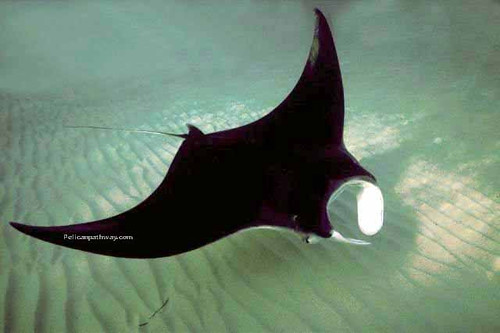
For the past few years, Douglas McCauley has been tracking Pacific manta rays that live around a chain of remote islands called Palmyra Atoll. McCauley, a marine biologist at the University of California at Berkeley, and his colleagues tag the giant fishes with “pingers” — acoustic devices that emit pulses — and then follow the sound. “You’re in a boat, following the animal night and day,” says McCauley.

The scientists embarked on this study to learn more about the ecology of these majestic animals. “There’s remarkably little known about manta rays,” McCauley says. Pacific manta rays are among the biggest fishes in the world, with wing-like fins that can stretch as far as nine meters across. To feed their massive bodies, they suck water into their mouth and out of their gills, trapping tiny animals in a filter-like mesh of bones. Any changes to the ocean food web — a rise in temperature or a drop in nutrient levels, for example — can influence the size of the manta ray population.

As the scientists followed the manta rays, they noticed something peculiar. Off in the distance, they could see Palmyra’s island chain. Much of Palmyra is still covered by forests of native trees. But there are also stretches of the island dominated by coconut palms — first brought by Polynesians centuries ago and increasingly planted today as a cash crop. As McCauley gazed off at the islands, it occurred to him that he was spending all his time off the coast of the native forests.

“We were puzzled that we kept being brought back to these coastlines with abundant native forests,” says McCauley. “We realized that maybe to understand the manta rays, we had to follow this message they were giving us.” More

Destroying mangrove forests is adversly affecting the nutrient balance in the Cayman Islanda. Editor


Sunday, May 20, 2012

Apocalyptic island of waste in the Maldives: Is this in store for Cayman?

The Cayman Islands needs to move urgently to stop this situation developing here. These islands must also embrace recycling. Cut down the volume of your waste stream and there is much less to go into a landfill. Food waste can be made into compost, metals can be sold, paper can be sold, glass can be added to the asphalt that is put on our roads, plastic bottles can be used for greenhouse construction in which we utilize the compost we made from food waste to grow much of our (organic) foodstuff. We do not have to reinvest the wheel, we just,need to use our imagination.

Saturday, May 19, 2012

Seychelles Pavilion opens at Yeosu Expo 2012

Seychelles President James Michel has commended the Yeosu Expo 2012 as an outstanding exhibition of marine biodiversity, as well as an opportunity for all nations to gather ideas and technology to preserve and protect the marine environment.

“As low-lying small island developing states, we are not only vulnerable to sea level rise but also aware of the importance of sustainable coastal tourism, responsible management of marine resources, and the protection of ecosystems and biodiversity. I am very proud of Seychelles’ presence at this international exposition, as our islands are at the forefront of the fight against climate change, as well as advocates for the development of a sustainable blue economy,” said President Michel.

The President attended the opening of the Seychelles pavilion at the Expo, which is found in the Joint Pavilion of the Indian Ocean, where Seychelles and the Maldives are the only island states represented, together with other African, Middle Eastern, and Asian coastal nations. Seychelles Ambassador to China, Philippe Le Gall, and staff of the Seychelles Embassy and Seychelles Tourism Board office in Beijing, showed the President and the Minister for Environment and Energy, Dr. Rolph Payet, around the pavilion. Also present was Seychelles Honorary Consul General in Korea, Mr. Dong Chang Jeong, who was thanked by the President for having helped Seychelles to be represented at Yeosu Expo in such a dynamic and convincing way. More


Thursday, May 17, 2012

Learning lessons from Fukushima, Red Cross Red Crescent moves to step up nuclear preparedness - IFRC

17 May 2012, Tokyo/Geneva — The Fukushima nuclear accident has shown that people cannot depend entirely on governments and the nuclear industry to ensure their safety, the Red Cross Red Crescent said as it set out plans to step up its work on nuclear disaster preparedness worldwide.

“People need to have more information and be better prepared in case the unthinkable happens and the Red Cross Red Crescent has a vital role to play,” said Tadataderu Konoe, President of the Japanese Red Cross and of the International Federation of Red Cross and Red Crescent Societies.

“They cannot rely solely on governments and on the nuclear industry, which has a vested interest in telling them that everything is safe and nothing can go wrong. It has and it could again, anywhere and at any time.”

After a consultation meeting in Tokyo, the humanitarian organisation, which is the world’s largest, grouping 187 national societies said it would move to set up a resource centre offering specialist advice on nuclear disasaster preparedness, along with chemical and biological hazards.

It will look at how national Red Cross and Red Crescent societies can be active in helping to protect communities, by raising awareness, helping to manage evacuation if needed and providing psyschosocial support and health monitoring in the event of a nuclear disaster.

“We are putting into action our commitment to extend t our well known and respected disaster preparedness work into the nuclear disaster sphere and to tap into our extensive experience from operations like Chernobyl and Three Mile Island,” said Matthias Schmale, IFRC Undersecretary General.

In the operation following the 1986 Chernobyl nuclear accident, the Red Cross Red Crescent has for example reached more than 1.6 million people with health and psychosocial services, while the 1979 nuclear accident in the United States triggered a long-term engagement with nuclear preparedness issues. More

The IFRC and ICRC also need to work with international organizations such as the IAEA and States Parties to ensure that much more risk analysis and disaster planning is undertaken prior to the siting and building of nuclear plants. Unfortunately, the private sector being motivated solely by profit is inclined to try and save on costs which can have negative impacts on the population. Furthermore, given the possible consequences of a nuclear leak, as happened at Fukushima and Chernobyl, there needs to be international legislation making those in command of the corporations personally liable. Such legislation should be applicable to the Board of Directors and the CEO. Editor.

Tuesday, May 15, 2012

Spotlight: Many Strong Voices

Ilan Kelman is a sharp and dedicated researcher, his native tongue unmistakeably academic. But behind the carefully constructed sentences lies a character of distinctly moral motivation. I’d call him an activist but I’m not sure he’d identify with such a subjective term. The Co-Director of Many Strong Voices – a joint initiative to strengthen collaboration between Arctic and Small Island States on climate change, I first met Ilan a year ago. During a predictable Question and Answer session at a conference, he rose from his seat and with a brief remark, broke through the silent controversy that so often punctuates policy events of this kind.

‘Overall, the theory behind so-called ‘climate (change) refugees’ has major critiques which have never been fully addressed,’ Kelman says. Ilan is resolutely adverse to easy generalisations on this issue. What then, in the words of Sheila Watt-Cloutier[1], unites people from balmy archipelagos and cold expanses of the northern tundra? According to the MSV’s website although the natural and human environments differ greatly, the existential questions climate change raises for both are comparable. In the Arctic and in Small Island Developing States climate change poses a serious threat to the social and cultural fabric of society. True for us all in the long term but most immediately clear in these regions. SIDS view themselves as the ‘barometer’ for climate change.


Although climate change undoubtedly plays a role in determining migration decisions it is one factor among many. For Kelman, the situation faced in the Arctic and SIDS is the exception to the rule. ‘There is little doubt that some Arctic and SIDS communities have been pushed towards migration due to climate change.’ Despite popular perception sea-level rise is rarely the issue of first concern for SIDS communities. Likewise in the Arctic concerns today are about less sea ice and warmer temperatures on land. ‘Less sea ice means more waves – increasing coastal erosion, warmer temperatures mean that overland winter routes, such as ice and snow roads, are too dangerous to traverse.’ Irrespective of the future impact of sea level rise the impacts felt today may be more complex but are already affecting livelihoods and social structures. ‘The main way of reducing the risks is to recognise how the environment is changing and to adjust (adapt) livelihoods and cultures to those changes. That can render traditional knowledge and traditional social structures untenable.’ But Kelman questions whether this is truly reducing risk. ‘It might simply substitute climate change risks for social and cultural change risks… we do not know.’


What MSV do know is that communities are already trying to address these challenges, often with little support. Kelman is adamant that people should to be able to make choices regarding their own futures, migration or otherwise, on their own terms. And that they should be able to do so ‘without worrying about also fighting to have their decisions and decision-making processes accepted by others.’ Part of MSV’s mandate is to support better representation of Arctic and SIDS people at the international level. When I ask Ilan whether he’s ever attended a Conference of the Parties (COP) he’s quick to point out that there are people better qualified to represent MSV. Spokespeople from the Arctic and SIDS themselves. The small size of many SIDS means that the international negotiator is often also a legitimate local voice. More


Thursday, May 10, 2012

Hurricane season starts June 01: Are You Prepared?

History teaches that a lack of hurricane awareness and preparation are common threads among all major hurricane disasters. Are you ready? Cayman Prepared -Cayman's National Emergency Management Agency More

National Hurrucane Center -Miama More


Hurricane Planning And Preparedness

Tropical Cyclone Preparedness Guide (PDF)

Hazard Management Plan For The Cayman Islands


Tuesday, May 8, 2012

Sea Level Rise In The Caribbean

Modeling the Transformational Impacts and Cost of Sea Level Rise in the Caribbean


This study provides the most detailed analysis to date of the damages and costs associated with SLR for the CARICOM nations, and builds on work completed in Phase I in 2009, previous economic studies as well as recent developments identified in the Economics of Climate Change Working Group (ECA) study in estimating impacts due to climate change.

The methodology incorporates top-down and bottom-up approaches (i.e., macro, meso- and micro-scales analyses) to model impacts on the economies of each CARICOM country individually. A unique strength of this economic study is that it is based on the most detailed geographic reality of coastal geomorphology and development that determine vulnerability to SLR.

The economic implications of the impacts of climate change and required adaptation are being increasingly quantified to better inform international negotiations regarding adaptation assistance.

Such in-depth information is essential for the Caribbean States, SIDS and LDCs to strategically reduce vulnerability through investment, insurance, planning, and policy decisions, and inform negotiations regarding adaptation assistance under the Copenhagen Accord that was agreed at COP15 in Copenhagen. More

Key Points Document - Download

Summary Document - Download

Final Document - Download

An Efficient, Effective Alternative to Water Privatization

Throughout history water has been one of the most universally recognized commons that nearly everyone would agree is a resource to be shared. But recent decades witnessed the rise of water privatization, in which profit-seeking companies take over public water and sewage utilities with often disastrous effects. Despite their poor track record, international water companies are still tapped to run municipal water systems in the belief that they can increase efficiency and quality while expanding service to those without safe access to water

A new report from from the Washington, D.C.-based organizationFood & Water Watch points to Public-Public partnerships as a better alternative that brings the strengths of efficiency and partnership without selling off our stake in a precious shares resource. To see the full report, click here — Jay Walljasper.

Clean drinking water and wastewater treatment are basic services that societies and governments provide. Water is a necessity for life, and safe water and sanitation are crucial for public health.In July 2010, the United Nations declared access to clean water and sanitation to be a human right. But recognizing the human right to water does not explain how to deliver this right to households. Even with this historic commitment to enhance water delivery and safety, an estimated 884 million people worldwide lack access to safe water, and 2.6 billion lack access to improved sanitation.Meeting the needs of these people will require significant investments in infrastructure and expertise. Over the past 20 years, major multinational efforts to provide people water have relied on private sector strategies in both developed and developing countries. These approaches have included numerous public-private partnerships (PPPs) between public water utilities and private water companies.


Proponents of water privatization promised increased investment and efficiency leading to improved and expanded service, but privatization has failed to meet these expectations. Instead, it often has led to deteriorating infrastructure, service disruptions and higher prices for poorer service. A different model, called public-public partnerships (PUPs), can be a more effective method for providing services. In contrast to privatization, which puts public needs into the hands of profit-seeking corporations, PUPs bring together public officials, workers and communities to provide better, more efficient service for all users. More


Friday, May 4, 2012

Morgan Stanley Backs $300 Million Fund To Install Residential Solar

Morgan Stanley is backing a $300 million fund to finance installation of residential photovoltaic systems – yet another sign that the turmoil roiling solar panel manufacturers has been a boon for installers.

Plummeting costs for solar panels have driven several solar manufacturers and developers into bankruptcy in recent months but the 75% price plunge of photovoltaic modules in the past three years have made rooftop solar increasingly attractive to homeowners and financiers like Morgan Stanley.

On Monday, SolarCity, a Silicon Valley solar installer backed by Tesla Motors chief Elon Musk, said it plans to file for an initial public offering. And two weeks ago, Sungevity, SolarCity’s cross-Bay rival, revealed plans to expand into the Australian solar market.

In the deal announced Thursday, Clean Power Finance – a San Francisco startup that offers software tools and financing to solar installers – Morgan Stanley’s MS Solar Solutions Corp, Zions Bancorporation and solar installer Main Street will create MySolar, a lease program to finance up to $300 million of rooftop solar arrays for homeowners in California and Arizona.

“The MySolar lease gives Clean Power Finance’s qualified network of solar professionals another affordable option to help homeowners immediately save money on their electricity bills,” Nat Kreamer, Clean Power Finance’s chief executive, said in a statement. More


Thursday, May 3, 2012

Winners and Losers in a Superpower-less World

What will the world look like without a single superpower setting the rules? That's the question that Ian Bremmer, the political risk expert, tries to answer in his new book, "Every Nation for Itself". Bremmer's focus is as much on politics as economics, but I think he has some useful insights about our future prosperity.

For starters, he has excellent timing for a book about the global power vacuum. One of the biggest lessons from the recent financial crisis was that no country had the economic formula exactly right. Attempts at unfettered capitalism ran into problems just as attempts at pure socialism did. That the world knows this is already a big change from the Cold War, where the two economic systems competed to prove their superiority. It's even a big change from the immediate post-Cold-War era, when capitalism's victory seemed complete.

In Bremmer's previous book, "The End of the Free Market", he identified state capitalism of the kind practiced in China, Saudi Arabia, and many other countries as the next great competitor among economic systems. But in "Every Nation for Itself", Bremmer sees an absence of global leadership as the balance of political power and economic might diffuses around the world. Now, nations are freer to choose their own way, mixing and matching pieces of economic systems to fit their interests - or at least their leaders' interests.

This flattening of the global power structure, paired with the disappearance of superpowers pushing economic systems backed by opposing ideologies, truly has left every nation to fight for itself. As a result, Bremmer says, forming coalitions to address problems such as climate change will be especially difficult. When these problems get out of hand, new conflicts may occur, raising the cost of doing business around the world. More


Saturday, April 28, 2012

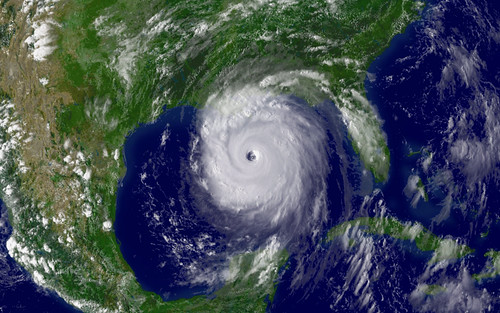
Global Warming and Hurricanes

An Overview of Current Research Results

1. Has Global Warming Affected Atlantic Hurricane Activity?

Two frequently asked questions on global warming and hurricanes are the following:

  • Have humans already caused a detectable increase in Atlantic hurricane activity
  • What changes in hurricane activity are expected for the late 21st century, given the pronounced global warming scenarios from current IPCC models
In this review, I address these questions in the context of published research findings. I will first present the main conclusions and then follow with some background discussion of the research that leads to these conclusions. The main conclusions are:

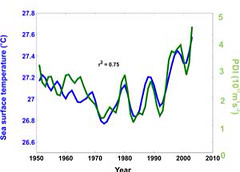
  • It is premature to conclude that human activities--and particularly greenhouse gas emissions that cause global warming--have already had a detectable impact on Atlantic hurricane activity. That said, human activities may have already caused changes that are not yet detectable due to the small magnitude of the changes or observational limitations, or are not yet properly modeled (e.g., aerosol effects).
  • Anthropogenic warming by the end of the 21st century will likely cause hurricanes globally to be more intense on average (by 2 to 11% according to model projections for an IPCC A1B scenario). This change would imply an even larger percentage increase in the destructive potential per storm, assuming no reduction in storm size.
  • There are better than even odds that anthropogenic warming over the next century will lead to an increase in the numbers of very intense hurricanes in some basins—an increase that would be substantially larger in percentage terms than the 2-11% increase in the average storm intensity. This increase in intense storm numbers is projected despite a likely decrease (or little change) in the global numbers of all tropical storms.
  • Anthropogenic warming by the end of the 21st century will likely cause hurricanes to have substantially higher rainfall rates than present-day hurricanes, with a model-projected increase of about 20% for rainfall rates averaged within about 100 km of the storm center. More
     

    Monday, April 23, 2012

    Scholarships for new MSc in Energy Policy for Sustainability at the University of Sussex, UK

    Dear colleagues,

    Just a quick reminder that we still accept applications for two partial scholarships for our new MSc programme in ‘Energy Policy for Sustainability’ for the 2012 entry. The programme is led by the Sussex Energy Group (SEG), one of the largest independent social science energy policy research groups in the world and a core partner in the Tyndall Centre for Climate Change Research and the UK Energy Research Centre.


    For more information on the programme please see:

    http://www.sussex.ac.uk/study/pg/2012/taught/3931/25557#tabs-2?SEG


    For more information on how to apply for the scholarships, please see:

    http://www.sussex.ac.uk/study/funding/opportunities/view/81


    Please forward this information to potentially interested students

    Connect the dots

    Bill McKibben’s 350.org has launched Connect the Dots Day. Scheduled for May 5 this global initiative is to draw attention to the fact that people all over the world recognize that climate change is happening (see poll results in New York Times article) and it is creating unpredictable weather events.
    McKibben is asking everyone to get involved with an event of some kind: a presentation, a protest, a community project, pictures, or another idea. Once compiled, they will deliver the message to politicians and media the world over.

    iMatter

    Another initiative regarding climate change has been undertaken by iMatter. Five youths have taken the bold step of suing the federal government for failing to protect the atmosphere. They held rallies throughout the United States on Earth Day, March 22, 2012. And on May 11 in Washington, DC, the lawsuit is being heard. The basic premise is that the atmosphere is a public trust for all generations and the government has a legal responsibility to protect it. The lawsuits would also require the government to put into place plans to reduce carbon emissions by at least 6 percent per year.

    In 2008, Lester Brown wrote about the need to connect the dots in his book Plan B 3.0 in relation to water and food.

    The link between water and food is strong. We each drink on average nearly 4 liters of water per day in one form or another, while the water required to produce our daily food totals at least 2,000 liters—500 times as much. This helps explain why 70 percent of all water use is for irrigation. Another 20 percent is used by industry, and 10 percent goes for residential purposes. With the demand for water growing in all three categories, competition among sectors is intensifying, with agriculture almost always losing. While most people recognize that the world is facing a future of water shortages, not everyone has connected the dots to see that this also means a future of food shortages.” More


    Saturday, April 21, 2012

    Looting the Pacific: ICIJ investigation on BBC World News

    Produced by London-based tve for BBC World News, "Looting the Pacific" features an International Consortium of Investigative Journalists' probe into the plundering of one of the world's last great fish stocks. Read the full investigation here: www.iwatchnews.org BBC World News will broadcast "Looting the Pacific" at the following times (all times GMT): Saturday April 21 at 9:30 am and 9:30 pm Sunday, April 22 at 2:30 am and 3:30 pm


    Tuesday, April 17, 2012

    Government pushes for more renewable energy choices

    Lawmakers voted in favour of a private member’s motion by UDP backbencher Cline Glidden to make it easier for people to produce and use renewable energy in their homes or businesses.

    The motion by Mr. Glidden, a West Bay Member of the Legislative Assembly, called for the government to “take all necessary steps to eliminate all utility-imposed restrictions on a person’s individual or business right to use renewable energy systems to offset utility consumption, thus reducing or eliminating utility costs and … to implement net metering using the [US] Interstate Renewable Energy Commission model rules for both net metering and grid interconnection”.

    Under the current Consumer-owned Renewable Energy arrangement of Feed-in Tariff System, or FITS, the Caribbean Utilities Company, which has the exclusive right to distribute electricity in Grand Cayman, buys 100 per cent of electricity produced by alternative energy systems from those who have signed up for the programme at 37 cents per kilowatt hour. Those individuals then buy electricity back from CUC’s main grid at the retail rate, which is currently 29 
cents per kilowatt hour.

    Net metering enables a bi-directional flow of electricity. Throughout the day, a customer’s solar, wind-generated or other alternative energy system may produce more or less electricity than is needed for his or her home or business. When the system’s production exceeds the customer demand, the excess energy generation automatically goes through the electric meter into the utility grid, running the meter backward to credit the customer’s account. When the customer’s electricity demand is higher than the renewable energy system is 
producing, the customer relies on additional power from the utility company.

    Mr. Glidden pointed out that there had not been much uptake from consumers of the pilot FITS system.

    The one-year pilot programme was introduced in January 2010 and is under review. By last month, only nine people had signed up for the programme – eight residential customers and one commercial business.

    “What is proposed in this motion is a system that would allow a homeowner to produce electricity for his own use and whatever electricity that is not used in its own facility, that would then be sold on to the gird, sold to CUC, at a rate equivalent to the rate that is charged by CUC. Hence, we have net metering,” said Mr Glidden. More

    Sunday, April 15, 2012

    Cuba Prepares For Rising Sea Levels And Extreme Weather

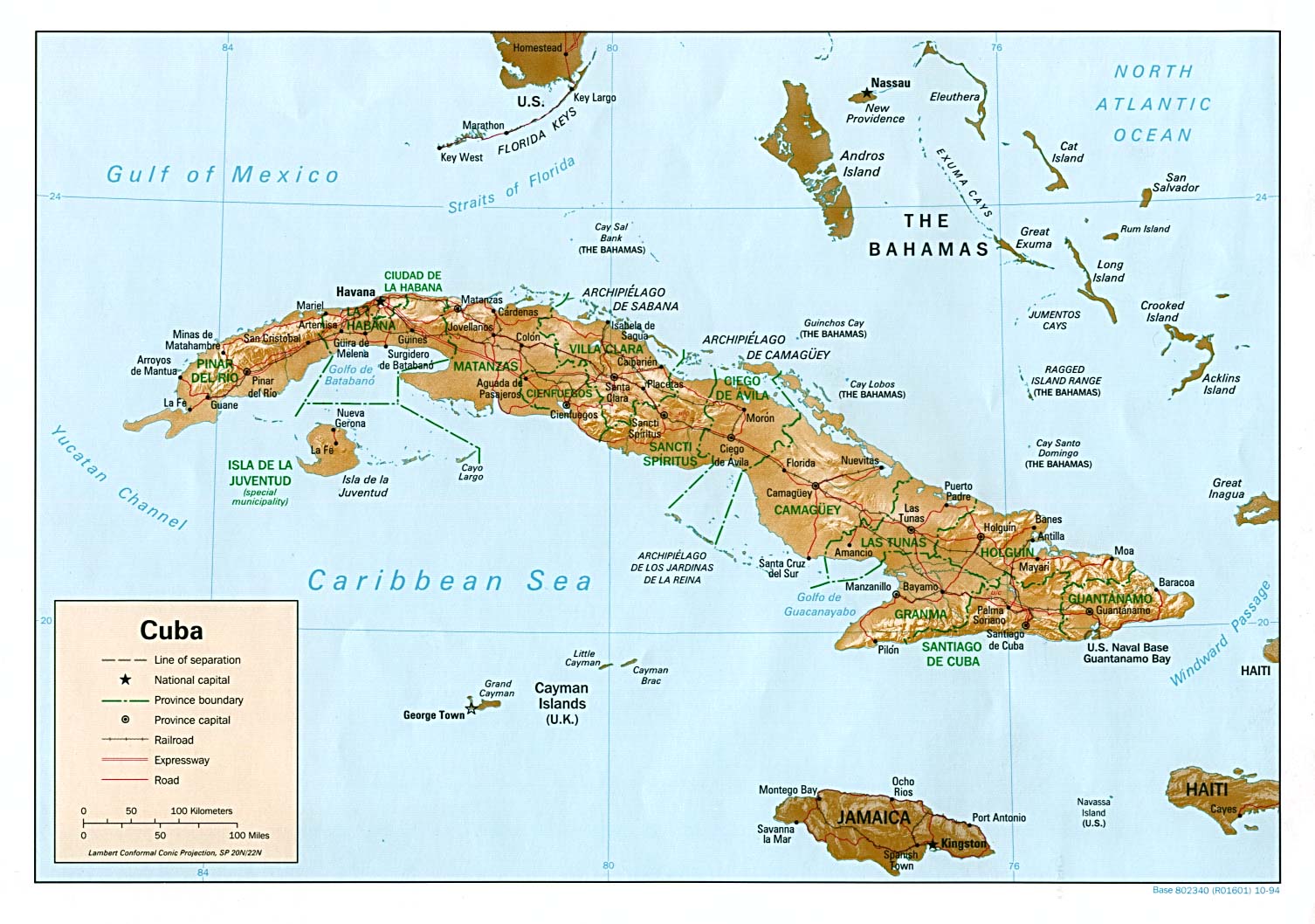
    Havana, April 11, 2012: One of the major challenges facing Cuba as it designs climate change adaptation policies is the preservation of its coastal ecosystems against the predicted rise in sea level and increasingly catastrophic extreme weather events.

    With the country’s 5,500 km of coastline and 4,000 cays and islets, almost everyone on the Cuban archipelago feels their life is tied to the sea in one way or another. “It’s lovely, but it is also dangerous,” said 78-year-old Teresa Marcial, who lives on the coast in Santa Fé, in the northern outskirts of Havana.

    For decades, Marcial has lived with the ocean practically lapping her patio. In 2005, floods caused by hurricane Wilma left her family and neighbours virtually on the street. “Huge waves swept everything away. We were taken by surprise. The water took away an extremely heavy wardrobe, which simply disappeared,” she told IPS.

    Her son, Martín Pérez Marcial, added that they have decided to sell their house and move to a safer place.

    “But as you can imagine, with the expectation that future hurricanes will be more intense because of climate change, no one wants to come and live here,” said a neighbour who did not mention his name.

    A few blocks away, builders are constructing a house that is raised more than two metres above ground level, using part of an older house and strong pillars for support. “If there is flooding, the water can circulate freely underneath the house,” said the construction foreman, José Luis Martínez.

    Behind the house, which is being built by “self help”, as private construction initiatives are called in Cuba, there is an outer wall of solid concrete and hard stone. “It saves on cement, and does not require steel, which rusts over time,” Martínez said.

    The talkative builder showed how the base of the containment wall has spillways for drainage, to let water flow back and forth. At the corners, the walls are shaped like a ship’s prow, “to break up the waves.” Several houses in the vicinity have similar walls, which “cost a pretty penny,” Pérez said.

    Santa Fé is at permanent risk of flooding due to hurricanes. Studies by state bodies put it among the coastal areas of the capital that face the greatest direct impact of tropical storms, and to a lesser extent of rising sea levels.

    Adaptation, an inevitable necessity

    Carlos Rodríguez, a researcher on land use planning and the environment for the government’s Physical Planning Institute (IPF), says 577 human settlements could suffer the combined onslaught of rising sea levels and oversized waves from swells and storm surges associated with hurricanes.

    In an interview with IPS, Rodríguez emphasised that according to a joint study by several Cuban scientific institutions, led by the Ministry of Science, Technology and the Environment and including IPF, an area of 2,550 square km of coast could be submerged by 2050.

    By 2100, the flooded area could expand to some 5,600 square km, according to sea level rise projections, he said. More


    Thursday, April 12, 2012

    Bill Gates Never Ran an Energy Company

    Last year, Bill Gates noted in an interview with Alan Murray of the Wall Street Journal that technologies like solar photovoltaics and LED lights were "cute" but could never deal with the bigger issue of climate change and powering the developing world.

    And, this week, writer Marc Gunther wrote in his postthat "Germany, once the world's leading market for solar power, is pulling back its subsidies. Q Cells, once the world's largest solar company, just went bankrupt.' This isn't happy news."

    So, I am writing to point out three things:

    1. The solar industry is growing and is significant, but is not going to solve all the ills of carbon;

    2. Mistakes are a blessing; and
    3. Theory is theory, not a solution

    1. Solar Growth: First, let me make note that I, and others, have just spent the last decade in solar creating the solar services industry which, according to the 2011 National Solar Jobs Census published by the Solar Foundation, grew 6.8 percent between 2010 and 2011.

    Plus, the solar industry installed $90 billion of equipment last year. That's double the amount of equipment that was installed for the new coal industry.

    And, GTM research and Solar Energy Industries Association (SEIA), issued a report that the showed that U.S. installed 1,855 MW (or 1.86 GW) of solar in 2011 and is expected to install a full gigawatt more than that in 2012: 2.8 GW.

    GTM Research and SEIA estimate the U.S. solar market's total value surpassed $8.4 billion in 2011.

    So, solar is winning and growing. But, no one is saying it is the only solution -- just a compelling piece of the puzzle.

    In fact, there is no silver bullet. We must find efficiencies and new solutions in solving the carbon issue in several areas: transport, agriculture, energy, forestry, industry, buildings and waste.

    However, when we think about carbon, most of us tend to think of two areas: transportation and electricity. While Bill Gates might label solar and LED lighting as "cute," the numbers seem to suggest otherwise. Both are billion-dollar industries and together with hundreds of other solutions will help reach the $5+ trillion in new investments necessary to make an impact by 2020.

    Remember, we did not get to this point with one major offender, and we will not solve our ills with one major solution. More


    Barbados to build first waste to energy plant at major landfill

    BRIDGETOWN, Barbados, April 12, 2012 - A waste-to-energy facility expected to process approximately 350 tonnes of solid waste a day, and provide between 10 to 14 megawatts of electricity is on the cards for Barbados.

    This was announced by the island’s Minister of the Environment and Drainage, Dr Denis Lowe, as he disclosed that Cabinet had recently approved BDS$377 million for the creation of a Mangrove Pond Green Energy Complex.

    Along with the waste-to-energy facility, this complex will include a solar power facility, a wind energy facility, the Mangrove Pond Beautification Programme, the construction of a new mechanical maintenance facility, and the Landfill Gas Management System.
    Dr Lowe said the complex formed part of Government's efforts to develop a comprehensive programme to manage solid waste disposal and create energy options for the country.
    "What we are also going to be doing in that package of services is to decommission cells one, two and three [at the Landfill], and commission the new cell four towards the end of June," he said.
    The projects listed under the programme are expected to assist with the development of the infrastructure that is necessary for achieving sustainability, efficiency and effectiveness in the execution of solid waste management in Barbados. More

    The Cayman Islands should, no matter where the new land-fill is placed, seriously consider a major recycling program. Editor


    The Pursuit of Low Gas Prices is Bad for the U.S.

    It's a fallacy that we can drill our way to low gas prices, and trying to do so not only threatens our health, but also wastes our money and misdirects innovation. If we stop focusing on the problem of high gas prices and who’s to blame and start pursuing solutions to the true problem—our oil dependence—we might find we agree more than we think.

    Oil price volatility carries a huge economic cost. High oil prices have preceded every recession since 1973, and have put mobility industries especially at risk. Savvy companies get this. FedEx (which burns 1.5 billion gallons of petroleum-based fuels) is now betting on electric or hybrid vehicles, and adding biofuels and natural gas to the mix for its delivery van, truck, and jet fleets.

    The relentless pursuit of low gas prices forces us to spend trillions and risk young Americans' lives. The Pentagon gets this, and has made “more fight, less fuel” a central part of its sweeping strategy to not only reduce through efficiency the amount of oil the military uses, but also to replace it with alternative sources.

    The North American Council for Freight Efficiency’s fleet efficiency survey shows that once the leaders in trucking started adopting efficiency measures, they continued doing so even when diesel prices dropped. Now that fuel prices are rising again, that investment is rewarding them even more.

    Many have pointed to the Obama Administration and its energy strategy, in spite of the fact that gas prices and volatility are tied to the world market (which pays little regard to who is president).

    Energy Secretary Steven Chu is in hot water for having said in 2008—before he was energy secretary—that, “somehow we have to figure out how to boost the price of gasoline to the levels in Europe.” Politically inconvenient given Chu’s position now, but did he have a point? More


    Alaska’s 1st Utility-Scale Wind Farm Gets Energy Storage Boost from Xtreme Power

    Xtreme Power, a power management and energy storage company, has been selected to supply Alaska’s first utility-scale wind farm with a significant energy storage boost, or backup.

    Xtreme Power will supply a 3-MW Dynamic Power Resource (DPR) power management and energy storage system to Kodiak Electric Association (KEA) for its 9-MW Pillar Mountain Wind Project.

    The Pillar Mountain Wind Project was originally 4.5 MW in size, and has been supplying KEA with nearly 10% of its electricity generation, but KEA’s satisfaction with it, combined with wind power’s cost compared to other alternatives, has triggered the company to boost the capacity to 9 MW. At 9 MW, though, KEA feels that an energy storage and power management boost would be helpful in maintaining or improving grid stability.

    “We were drawn to Xtreme Power for its proven performance in renewable rich grid environments and sought to bring this same stability assurance to our Pillar Mountain Wind Project,” said Darron Scott, President and CEO of the Kodiak Electric Association. “The XP team assessed Pillar Mountain’s energy storage needs to develop a Dynamic Power Resource system that enhances grid operations while adhering to KEA’s financial targets. Together, we are furthering KEA’s goal of reaching 95 percent renewable power generation by 2020.” More

    Source: Clean Technica (http://s.tt/19drh)

    Start the shift to a better future for transportation

    FedEx Chairman, President and CEO, Fred Smith has said [1] of our nation's dependence on oil, "What is needed now is an urgent, national commitment to action." As oil prices once again top $100 a barrel, we're unveiling a video that we hope will help bring more attention to doing just that. Seventy [2] percent of oil used in the United States is for transportation fuel. In his testimony [3] to Congress, Fred Smith outlined the incredible costs and burdens this dependence creates on families, businesses and our national security. There are better alternatives. And while we're used to delivering overnight at FedEx, we know this shift is something that's going to take a little longer [4]. Check out this short piece about the current challenge and go here [5] to find out what other steps you can take right now. [1] money.cnn.com [2] electrificationcoalition.org [3] appropriations.senate.gov [4] about.fedex.designcdt.com [5] www.edf.org


    Sunday, April 8, 2012

    Choking on Rising Fuel Costs for Electricity, Barbados Launches Multiple Source-Multiple Use Renewable Energy Plan

    Another sign of the rapidly changing (for the better) energy landscape: the southeastern Caribbean island nation of Barbados is taking an integrated, multiple source-multiple use approach as it launches a program to shift away from its almost total reliance on imported fossil fuel imports to clean, homegrown renewable sources for electricity generation and other uses.

    The Barbadian cabinet on April 5 approved the US$188.5 million Mangrove Pond Green Energy Complex, according to a Caribbean Journal report. The complex is to include solar power and wind power facilities, a new Mechanical Maintenance Facility, a Waste-to-Energy Facility, and a Landfill Gas Management System.

    In total, the Barbadian government expects the Mangrove Pond Green Energy Complex to produce more than 25 MW of clean electrical power that can be sold on to the island nation’s grid, reducing dependence on fossil fuels and helping reduce greenhouse gas emissions.

    Barbados relies almost entirely (96%) on fuel oil and diesel to generate electricity; 90% of it imported. That’s comparable to what the island nation spends on education. Barbados’s bill for oil imports in 2009 and 2010 totaled some $230 million, which amounts to nearly 6% of national GDP, about what it spends on education, Senator Darcy Boyce was quoted as saying in a Barbados Today article.

    Barbados’s Sustainable Energy Framework

    The government intends to reduce Barbados’s oil import bill significantly, Boyce, who heads the Prime Minister’s Energy Office, told attendees gathered for the launch of the Energy Efficiency Awareness Programme of the Sustainable Energy Framework for Barbados Pilot Project.

    The aim of the Sustainable Energy Framework for Barbados Pilot Project is to reduce fossil fuel use by some 30% by bringing renewable energy resources online, and to reduce electricity demand by over 21% by implementing energy efficiency measures and technologies over a 20-year period. TheInter-American Development Bank (IADB) is contributing $1 million in investment grants and loans through the World Bank Group’s Global Environment Facility (GEF).

    Rising global market prices for crude oil and derivatives have been rising consistently for several years, putting greater financial pressure on local businesses and residents alike. The direct effect rising fuel costs have on ratepayers’ pocketbooks and businesses’ operating budgets is compounded by the indirect effects, as they flow through into prices of all imports and are passed on to consumers. More


    Monday, April 2, 2012

    Ecocide is a crime.


    For almost twenty years, Garth's photography of threatened wilderness regions, devastation, and the impacts on indigenous peoples, has appeared in the world's leading publications. His recent images from the boreal region of Canada have helped lead to significant victories and large new protected areas in the Northwest Territories, Quebec, and Ontario. Garth's major touring exhibit on the Tar Sands premiered on Los Angeles in 2011 and recently appeared in New York. Garth is a Fellow of the International League Of Conservation Photographers

    For those interested to know more about our profile cover picture of before and after please watch this excellent TEDx talk by Garth Lenz about the destruction of the Athabasca wetlands and forest in Canada through extraction of the tar sands for oil.

    What does environmental devastation actually look like? At TEDxVictoria, photographer Garth Lenz shares shocking photos of the Alberta Tar Sands mining project -- and the beautiful (and vital) ecosystems under threat.